
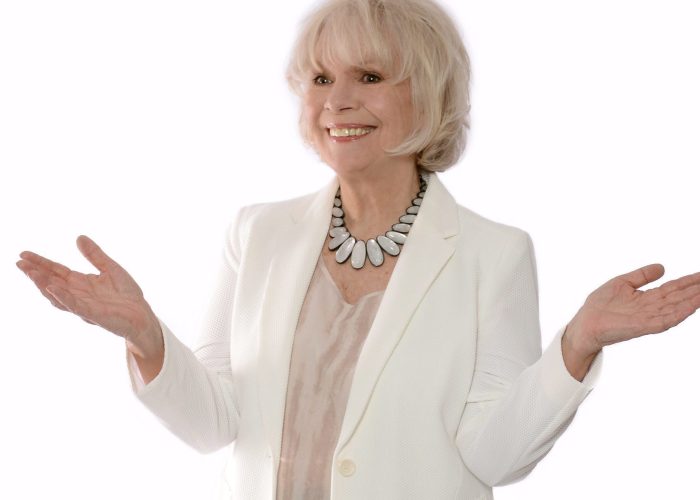
Over her 73 years, Kathy Smith has worn many hats.
She has been a counterculture hippie, a member of an all-female rock band, a Yorkville social activist, a wife and mother, a single working mother, a self-proclaimed Late Blooming Boomer, a freelance public relations and marketing specialist, an adult educator, and, for a time, the Director of Training and Development for Big V Pharmacies of Ontario.
These days, Kathy spends her time advocating for aging Canadians and organizing activities for London’s Creative Age communities, helping a diverse network of neighbourhoods, municipalities, institutions and nonprofit organizations secure resources to start, grow and sustain creative aging programs, events and activities.
“Many people have drawn very defined lines between work, voluntary activities, hobbies and leisure pursuits. I don’t seem to have those fixed boundaries. Sometimes I do community work for no pay and sometimes I get paid. I might travel for leisure, but I also get paid as a tour guide. I offer art classes free of charge but I sometimes research, develop and teach courses and charge a fee for service. Along the way I navigate and negotiate depending on the circumstances,” says Kathy.
Kathy remembers her childhood Hamilton Road East London working class neighbourhood as a multicultural melting pot in which classmates and friends were from different races, ethnicities and religious backgrounds.
“Most of us were poor but I didn’t really realize how poor we were until I met new friends from other neighbourhoods. When I started to compare our circumstances, I was absolutely stunned by their family life, wealth and opportunities. I often felt marginalized. I felt like a nobody when I desperately wanted to be accepted – a somebody.”
This feeling of being marginalized led to Kathy’s early involvement with the creative arts.
“I think I got involved with the creative arts not only to express my inner life but as my way out of a messed up family and social circumstances,” says Kathy. “I think those tough formative years made me resilient, creative, enterprising and accepting of others.”
The 1960s mantra was “Tune in, turn on and drop out” and that’s just what teenaged Kathy did.
“Right after my 16th birthday, I quit school and walked away as fast as I could,” she recalls.
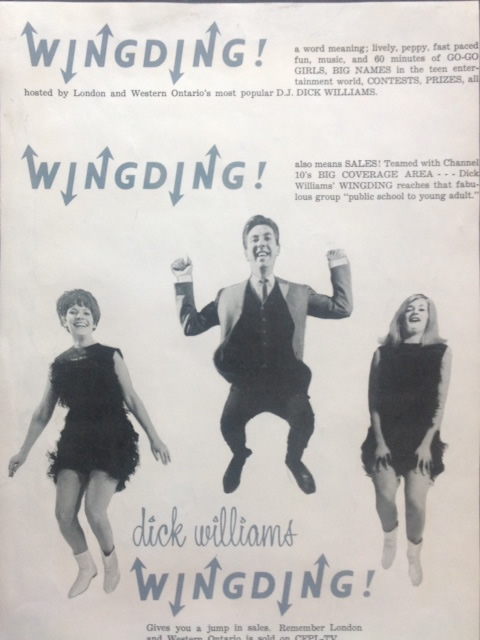
“I got a job as a go-go dancer for a local London radio station and a TV show that featured area bands. In 1965, I was asked to audition for a Toronto TV Show and an all female band. My bag was packed with my survival essentials and years of hurt feelings. There was no turning back. I was rebelling against my parents and the social values of the time. I vowed I would never ever return to conservative, narrow minded and uptight London Ontario…the town that forgot how to have fun.”
She didn’t get hired for the Toronto TV Show, but she did end up in the all-female band called The Living Dolls in which she played keyboards and learned some drums and bass guitar.
Kathy lived close to Yorkville in the Annex Neighbourhood. In 1969 Jane Jacobs and the Annex Ratepayers Association were busy trying to protect the historical neighbourhood from developers. Kathy remembers it as an amazing and diverse neighbourhood with artists, musicians, academics, the nouveau riche and old family money, too.
In 1966, Kathy came back to London to see her hometown boyfriend, Grant Smith. Grant ended up moving to Toronto where he was offered an opportunity to join a band called The Power which became known as Grant Smith and The Power, an 8 piece R&B group.
“Grant’s group had a hit record, so I quit my band and we ended up traveling through many American towns and cities that were experiencing great unrest with race riots and protests. It was exciting and kind of dangerous,” recalls Kathy. “We got married in 1968. I became a mom in 1972. Everything changed for me when I got pregnant and had my son.”
Following her divorce, Kathy returned to London in 1979. The move forced her to start all over again.
“As a high-school drop out and single mom, my employment opportunities were very limited. I didn’t really join the ‘normal’ mainstream workforce until I was 30 years old. While most boomers experienced a career or financial peak in their 40s and 50s, I didn’t have my career peak until I was in my 60s. When my friends were planning to retire, I was just getting fired up – a second wind, if you will,” Kathy recalls.
Partially by chance and partially by choice, she became part of the gig economy with three main clients, mailing direct mail flyers, organizing small special events, producing newsletters, fundraising or anything promoting local businesses or organizations.
She taught adult night courses in Promotions and Public Relations through Fanshawe College’s Part Time and Continuing Education Department. She was a popular facilitator and her courses filled up quickly as a result of her ability to come up with creative ideas, interesting topics and course plans.
“My continuing education experience led me to my one and only ‘real job’ with Big V Pharmacies of Ontario as Director of Training and Development. I created a 26 part Management Training Program using the case study method. It took me and a co-worker 3 years to do the research, develop the content, test the pilot programs and implement throughout Ontario. Big V won the very first Chamber of Commerce London Business Achievement Award and we were runner up for the provincial award. That was an exciting time to be involved with corporate or management training,” she recalls.
Despite her success, Kathy walked away from the Big V position after 36 months, citing burnout and her dislike of leaving her son, Kristan, alone while she was on the road.
“During my self-imposed sabbatical, I felt a strong urge to paint – canvases, walls or anything I could get my hands on. A short and planned break turned into a 10 year endeavour and I somehow found creative ways to make a modest living along the way. I didn’t make a lot of money, but I could focus on my son and we were happy.”
In 2007, Kathy got involved with the Creative Age movement after attending an online seminar presented by Dr. Gene Cohen. Cohen demonstrated that participation in activities that foster creative engagement and skills mastery in a social environment has positive psychological, physical and emotional health benefits for older adults. It gave Kathy a new focus in life.
“After mid-life, I tell people they can look forward to Creative Age and not old age. It is a positive approach or mindset to the reality that we all get older. In my work I focus on creativity in the broader sense and I do make more personal time to fulfill my own urges for creative self expression in everything I do. My colleague, Pat Spadafora the former director of the Sheridan Centre for Elder Research, said it best: ‘We are freeing ourselves of limiting beliefs about aging and embracing the reality that individuals continue to grow, learn, and contribute to their communities throughout the life journey.’”
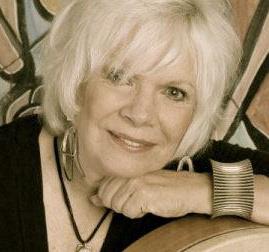
Unquestionably, Kathy has been the driving force behind London’s Creative Age movement and community activities.
In 2009, she organized a unique year long creative aging program for residents and day program participants at the Dearness Home. She also volunteered her time to help the City of London receive its first Age Friendly Community designation from the World Health Organization.
From 2010 to 2013, she developed and organized a research project to identify late career transitions and income earning opportunities for older workers.
“We knew that 75 would eventually become the new 65,” she says. “Many will continue to delay retirement or not retire at all.”
From 2013 through to 2017, she worked with volunteers to provide creative aging programs and events for adults 55+ in various neighbourhoods through the London Public Library branches.
During that time, she also developed community awareness campaigns including, social media and presentations and events targeted to arts, health and housing organizations in London and area.
“The key to developing community capacity for creative aging programs is to train volunteers, artist instructors and adult educators to work with a new generation of older adults. Through the London Arts Council, we developed a training program for 12 London Artists in Residence and had them offer programs to long term care facilities, hospitals, retirement homes and seniors centres. I still work with municipalities and communities to develop creative networks and programs for older adults. The next Creative Aging Training Programs will be offered in Thames Centre this summer. Professionals from Middlesex County will be invited.”
Kathy’s accomplishments have not gone unrecognized. She has been named to the City of London Mayor’s Honour Roll, received the London Council for Adult Education’s Adult Educator’s Award, and in 2016 she was recognized by the Ontario Minister Responsible for Seniors and the Lieutenant-Governor of Ontario for her volunteer contributions to raise awareness to promote cross-sector initiatives for seniors in the London region.
Somehow, throughout all of this community activity, she has still found time to pursue her own artistic muse and explore her own curiosities.
“I have many interests and creative pursuits. I still paint, play music, write, perform and teach. It’s all creative. A few years ago, we started a group called The Rhythm Sisters and performed concerts at the London Music Club and Wolf Performance Hall for a year or more. We keep saying we’ll have a reunion, but I don’t think it will happen. It’s a whole lot of work and it’s expensive to develop a one hour show,” she says.
What does the future hold for Kathy Smith?
“My focus will be shifting to creative housing options and aging at home services. I will continue to help organizations secure the resources they need, both financial and human, to do community development projects. I have more requests to do public speaking and professional development presentations. For the next five years, it will be my goal to connect and empower older adults to work together to develop innovative and affordable solutions to address their needs in housing and home support programs. When my son returns from Europe, I will probably assist him with his plan to start his new business and then I’ll probably just work for him in some very limited capacity.”
Mentoring and coaching other women is an area of particular interest to Kathy.
“As more women are reaching their middle years, they are thinking about late career changes or making other plans for the second half of their lives. I am often asked to provide presentations about my experiences and ideas. As a creative ager I explore, engage and connect and I plan to remain engaged as long as I am needed or as long as I am able to contribute something needed or valued.”
“Career, work, social, civic engagement and leisure have always been rolled into one thing. I just can’t see ever wanting to give anything up just yet. When it comes to creative aging, I consider myself my own case study,” says Kathy.
“Everyday life still amazes me!”
You can contact Kathy for more information about London’s Creative Age communities and activities through her website: http://creativeage.ca/