KSS 25th Anniversary Concert — Sublime!

34178818_10155635204936344_3933586780619538432_n

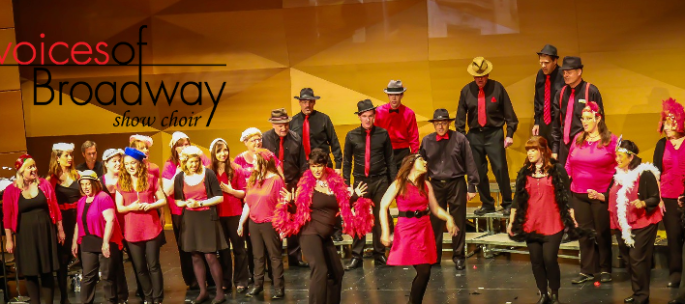
Saturday, June 2, 2018 was a very special night for award-winning local community choir, The Karen Schuessler Singers.

It was the choir’s 25th Silver Anniversary Concert — and all the stops were pulled out to make the evening’s program memorable for both performers and audience.

Delighting London audiences since their debut in 1993, KSS has become known for its widely varied, accessible and innovative programming, and this night was exemplary of these traits.

21686859_10154972522731344_6469209118748423687_o

The evening’s program kicked off with a simply marvelous rendition of John Rutter’s Gloria I, followed by an arrangement of legendary Canadian folk singer Stan Rogers’ Fogarty’s Cove arranged by Ron Small.

Karen Schuessler, the choir’s namesake and conductor, joked that the Rogers tune was one that the group had intended to include in an earlier concert, but due to time constraints, it was not performed.

“We should do a whole concert of songs we never got around to doing,” she quipped.

The stirring spiritual Deep River, arranged by Brian Ratcliffe was next, followed by audience favourite Battle of Jericho, arranged by Moses Hogan.

An older piece, Dirait-on, was introduced by conductor Schuessler as being 500 years old but just as interesting today. It was.

One of the most successful shows KSS has ever mounted was 2018’s Tribute to ABBA. The choir performed the catchy tune Super Trouper, complete with a driving disco beat provided by the evening’s percussionists , Greg Mainprize and Rob Larose.

33922444_10155626924201344_169939138504556544_n

Another traditional tune, Wondrous Love, arranged by Paul Halley, closed out the first part of the program before Intermission.

Part II opened with Ralph Vaughn Williams’ O Clap Your Hands, followed By Eriks Estenvaid’s Stars, and then Hans Leo Hassler’s Cantate Domino.

Reaching into the its earlier production of the Road to Freedom, the KSS Singers stirred the house with a rendition of Kevin White’s Song of the Children arranged by Brian Ratcliffe.

Conductor Schuessler pointed out to the audience that one of next season’s concerts is Sondheim & Schonberg, featuring Sondheim’s greatest hits and music from Schonberg’s Les Mis! The choir then performed Master of the House from Les Miserables.

The evening ended off with crowd favourite, The Long and Winding Road, from the choir’s homage to The Beatles’ songwriting team of John Lennon and Paul McCartney.

Karen Schuessler PicAfter a much deserved standing ovation, it was off to the church’s basement for a reception where audience members could view memorabilia from the group’s first 25 years and mingle with the members of the KSS choir.
It was a fine evening for performer and audience member alike.

Rick Young, June 3, 2018


Review: Chuckee Zehr Performs Janis Joplin, May 4, 2018, Aeolian Hall

5c287b37eec455162dc62e2c9f08e8f5-rimg-w720-h480-gmir

Ever have that feeling that you have been transported back in a time to a magical moment that gives you goosebumps all up and down your body?

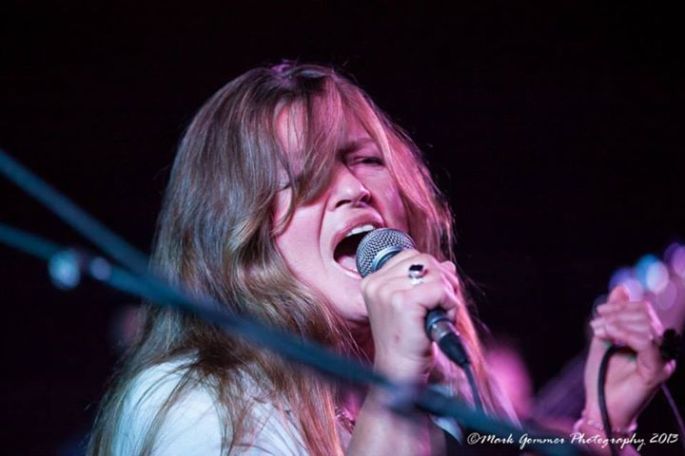
Well, it happened to me last night at London’s historic Aeolian Hall at a performance by Blues singer, Chuckee Zehr, during her cover of Janis Joplin’s Cry Baby. Performing on the hall’s grand piano, unaccompanied by her stellar three piece band, Zehr wrenched every little bit of hurt and sorrow possible out of the Joplin standard.

Not only did her rendition bring me to tears and bring the audience to its feet in applause, it also transported me back to London’s Wonderland Gardens, a long-gone popular concert hall, where my Janis Joplin cover band, The Comic Opera, used to routinely open for touring acts like Mitch Ryder and the Detroit Wheels and Mashmakan in the late 1960s and early 1970s.

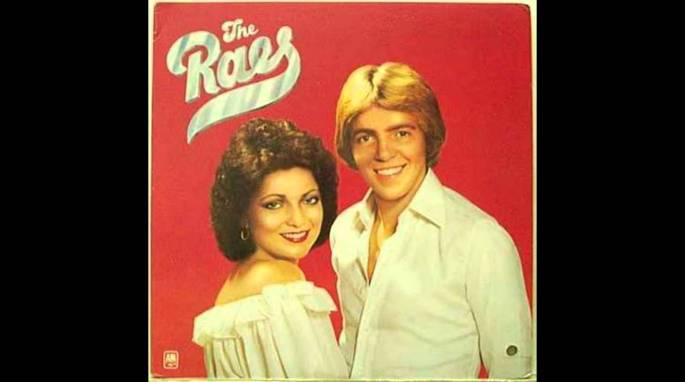
Playing a full catalogue of Joplin tunes including Cry Baby, the band featured the talented vocals of  a very young Cherrill Yates from St. Thomas, who would go on to become half of the wildly successful disco duo, The Raes in the mid-1970s.

It also transported me back to Toronto’s now demolished CNE Stadium where I saw Janis Joplin perform in May 1970 as part of the infamous Festival Express tour (http://heritagetoronto.org/the-festival-express/). Here’s her set list for the concert (https://www.setlist.fm/setlist/janis-joplin/1970/cne-stadium-toronto-on-canada-13d20539.html).

The Comic Opera 1969, Yates, McCann, Young, Eade and Moorhouse 004

maxresdefault

But, last night wasn’t 1969, it was May 4, 2018 and Zehr and her band managed to keep the Sold Out full house crowd of baby boomers and millennials clapping, dancing and singing along with crowd favourites like Me and Bobbie McGee and Lord, Won’t You Buy Me a Mercedes-Benz and many other Joplin covers for close to two and half hours.

Interspersed with the Joplin covers, the band played tunes by Etta James, The Tedischi Trucks Band and some very tasty original tunes including the soulful Bad, Bad Feeling.

To be sure, Chuckee Zehr is a versatile multi-talented, charismatic entertainer who had the Aeolian audience mesmerized for the duration of the concert. At one point towards the end of the evening, a large crowd of dancers, mostly female, found its way to the front of the stage gyrating and singing along with the diminutive singer.

The band closed the night with a stirring rendition of perhaps Joplin’s best known song, Piece of My Heart, before a standing ovation crowd.

The concert was the first in the Aeolian’s new “Lives Through” series.

If this first concert was any indication of what the rest of the series will be like, this reviewer can’t wait for them to arrive.

Rick Young, May 5, 2018


London’s Mayoralty Race, May 2018: A Review of How We Got to This Point.

brown

May 1, the first day prospective candidates could file their paperwork for a kick at the can in October’s municipal election, has come and gone.

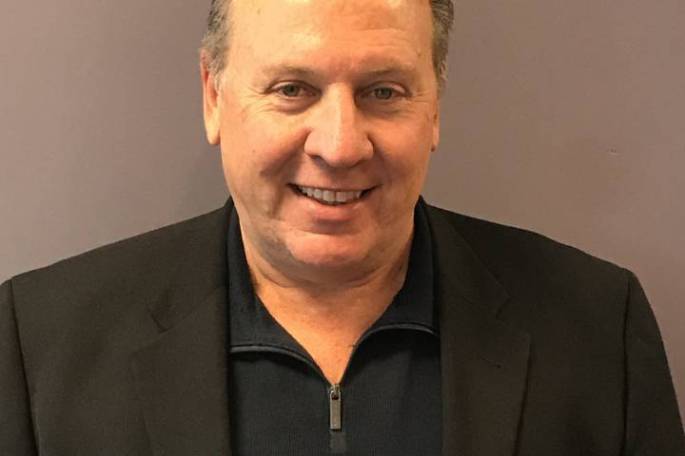
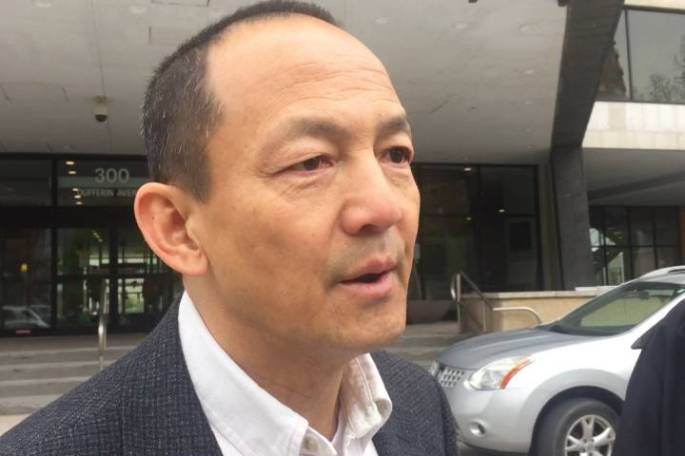
At this point, six declared candidates for Mayor have joined the fray: Paul Cheng, Sean O’Connell, Stephen Orser, Paul Paolatto, Tanya Park, and Jonas White. Incumbent Mayor Matt Brown will not be standing for re-election.

It’s worth reviewing how we got to this point.

To be sure, the 2018 election will be dramatically different from its 2014 counterpart. In 2014 there were no less than 15 people vying for the Mayor’s chair. There was also a full slate of fresh-faced rookie candidates challenging London’s old guard for ward seats.

As the campaign developed a so-called “progressive” coalition coaelesced around mayoralty candidate Matt Brown (a local big L Liberal) who promised to bring fresh ideas and return dignity to city council, which had been tarnished by misdeeds of former Mayor Joe Fontana and his cronies.

On election night the results were pretty predictable. Brown won a clear majority of the votes cast (57.75 per cent) and his progressive coalition pushed aside Joe Swan, Bud Pohill and other old guard councillors.

The future looked bright. Anything seemed possible. Dignity had been restored to city politics.

Big policies like the London Plan and BRT were introduced with much fanfare and it looked like the new council was planning on a long stay in office.

And, then it happened.

In June 2016, it was disclosed that Brown had carried on an extra-marital affair with Councillor Maureen Cassidy, then his Deputy Mayor.

Suddenly, almost overnight the shine seemed to come off the new council, and although they would probably deny it, the council’s momentum slowed and its honeymoon with London voters was over.

After Brown and Cassidy returned to council after self-imposed suspensions, council turned its attention to implementing what it perceived as its mandate to put shovels in the ground for a new mass transit system. After an earlier LRT proposal was rejected due to staggering costs, council settled on the less expensive, but no less controversial, BRT alternative under the Shift banner.

However, things didn’t proceed quite as anticipated. Poor communications between city staff, council and the public lead the emergence of an anti-BRT group calling itself Downshift, composed mainly of Richmond Row merchants fearful that their businesses would be adversely affected by the construction of the proposed BRT route.

A rather raucous public meeting at Budweiser Gardens revealed that there was a good deal of anti-BRT sentiment and opposition among London taxpayers.

paul-paolatto-pic

Potential mayoralty candidates Paul Cheng and Paul Paolatto expressed their displeasure with the project vowing to scrap it altogether or come up with a better alternative.

Suddenly, BRT didn’t seem like such a done-deal despite the provincial Liberal government ponying up hundreds of thousands of dollars earmarked for the project in 2018.

image_uploaded_from_ios

Then in April 2018, Brown announced that he was not running for re-election, probably realizing he had little chance of winning.

BRT enthusiasts must have been devastated. Their tireless champion was not going to be there after October to help push through the project.

parkt

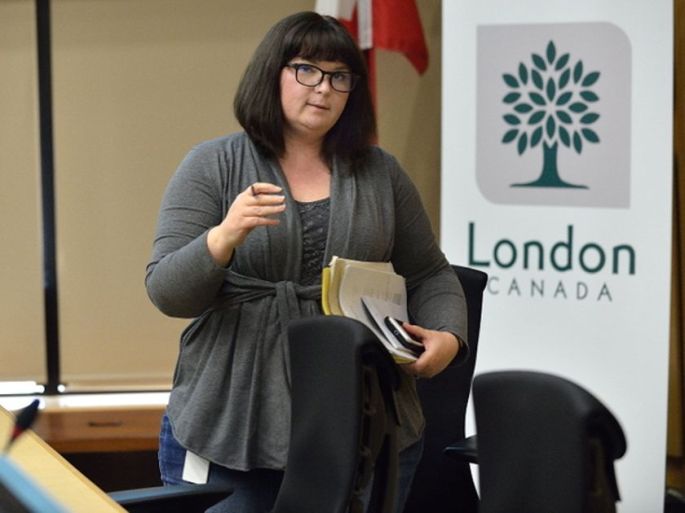
Councillor Tanya Park, who had earlier announced she would not be running because she had accomplished everything she had set out to do, and who had mounted an unsuccessful campaign to be the Ontario NDP candidate in London North, stepped into the breach announcing her candidacy for Mayor, saying she would continue to promote the project as Mayor.

After the three major mayoralty candidates filed their papers, they fired off their initial salvos with Cheng proclaiming his familiar refrain: Let’s open London for Business; Paolatto surprisingly, but predictably, expressing his support for London’s developers; and Park letting it be known she is running on a platform of job creation and leadership on issues such a fighting sexual harassment.

Something tells me that we will see even more Londoners throwing their hats into the race for Mayor in the months to come. The deadline for filing the paperwork is July 27.

Rick Young, May 3, 2018


Why Can’t London Financially Support a Local Arts and Culture Publication?

The Beat Magazine Promo Ad

The recent announcement that long-established Scene magazine was going to cease publication after its June 2018 issue, and the earlier demise of The London Yodeller and Our London, stirred up my creative juices and got me to thinking about the four years I spent publishing The Beat Magazine (at first called The Beat: Arts In London) from 2009 to 2013.

To paraphrase Charles Dickens, they were both the best and worst years of my post-teaching retirement life.

The best of times in that our creative team — editor Nicole Laidler, art director Lionel Morise, online theatre editor Donald D’Haene, copy editor Beth Stewart, arts calendar editor Valerie Cavalini, and photographers Paul Miszczyk and Deborah Zuskan — churned out London’s premier arts and culture magazine monthly and then quarterly from October 2009 to June 2013, until the money finally ran out. Moreover, the local and regional artists we had the privilege of getting to know and covering in the magazine and on our website was truly a transformative experience for all involved.

However, it was also the worst of times in that it was a constant struggle to garner sufficient advertising revenue from local arts organizations and businesses to keep the magazine afloat and pay our freelance contributors and printer.

I take great pride in saying that we always paid our writers, and the fact that we never asked anyone to contribute articles, photographs or reviews in return for exposure or learning on the job.

And this brings me to my question: Why does London seem incapable of supporting a locally produced arts and culture publication?

Other writers like Jay Menard have addressed this question in blogs and articles, suggesting that everyone wants something for nothing and they aren’t willing to pay for the creative efforts of their peers, either in the form of cost per issue or paid advertising.

Some have suggested that government subsidized not-for-profit operations like London Fuse and organizations like the London Arts Council and Tourism London make it difficult to establish and sustain a privately operated publication.

Others identify the corporate machinations of organizations like Postmedia Network (owners of the London Free Press and The Londoner) and TorStar Corporation which seemingly go out of their way to extinguish local competitors in pursuit of monopolizing the market and limited advertising dollars as the problem.

All three of these explanations have a lot of validity and they are closely interconnected.

If an operation like London Fuse can function on grants from the Ontario Trillium Foundation and Employment Ontario, and yet still manage to get people to write for free by offering “experience for emerging talents and allow[ing] volunteer contributors to hone their skills of content creation,” then power to them, I suppose.

It is my belief, however, that creative contributors should always be paid for their work either in cash or in the case of reviewers, in-kind in the form of tickets to events.

Then there are municipally subsidized organizations like Tourism London and the London Arts Council, both of which offer free events listings and promotional articles and press releases about local arts and culture events and personalities. Although, unless things have changed, I think a paid membership of some kind is required for Tourism London to include a venue’s events on its website. I’m sure someone will correct me if I’m wrong. It’s kind of tough for private publishers to compete with the City Culture Office with its seemingly endless supply of promotional cash.

I’m sure most readers are aware of the shameful treatment of the staff at Our London (our friend Sean Meyer immediately comes to mind) by Postmedia Network and TorStar Corporation a few months back when the two corporate giants conspired to shutter the informative weekly — thus guaranteeing Postmedia’s Free Press and The Londoner a monopoly on local print news and local print advertising dollars. To be sure, the real loser here is the local community which has had its voices limited by greedy corporate collusion.

That brings me to my last point about everyone wanting everything for nothing, all the time, everywhere, no exceptions. This one is a tough one. The Internet ushered in this attitude, especially among millennials, with its immediate access to information with the push of a button.

But, as we have learned recently with revelations about social media platforms like Facebook selling client information to corporations in search of compliant consumers, nothing is really free. There is a price to pay somewhere.

So, in a nutshell, that’s why it’s extremely difficult and challenging to sustain a print publication of any kind, let alone one that focuses on arts and culture, in a medium-sized market like London.

That’s why the path is strewn with the bodies and memories of past publications like Artscape, The Beat Magazine, The London Yodeller, Our London, and, now, Scene.

But, why am I telling you all this?

Call me deranged, deluded or insane — but I still believe Londoners deserve a locally produced high-quality print and online arts and culture publication that tells the stories of the creative artists who call our beautiful city home.

Rick Young, April 29, 2018.