Fresh Cream, 1966

Only Rock superstars Eric Clapton, Ginger Baker and Jack Bruce had the audacity to call their new supergroup Cream, as in “cream of the crop.” In fact, they were the first Rock supergroup.

Cream’s 1966 debut album, Fresh Cream, was unlike anything heard before. Here you had three musical virtuosos playing together, yet each approaching his instrument like a soloist.

Tunes like their cover of Willie Dixon’s Spoonful, Sleepy Time Time, Rollin’ and Tumblin’, and, of course, Ginger Baker’s extended drum solo on Toad were proof that the group was the best of the best. I remember buying the album at London’s Bluebird Records because I thought it had a cool cover.

It’s another album that had a significant influence on my musical career and tastes.

Are You Experienced? (1967) – Jimi Hendrix Experience

To be sure, no album had more of an influence on my musical career and tastes than Jimi Hendrix’s 1967 debut LP, Are You Experienced?

Considered to be one the greatest Rock albums of all time, the disc catapulted the young Seattle-born guitarist to fame. I still remember hearing Purple Haze and Foxy Lady for the first time and asking out loud, “Who the fuck is that?”

Manic Depression and Third Stone From The Sun completely blew my mind. Up until that time, I considered myself a pretty decent drummer. After hearing Mitch Mitchell’s thunderous, fill-laiden playing behind Hendrix’s soloing, I realized it was time to put in a lot more hours of practicing.

After hearing this album, we were all a little more experienced. I was lucky enough to see Jimi live at Maple Leaf Gardens in May, 1969. And, yes, he was that fucking loud!

Albums That Had a Major Influence on My Musical Career and Tastes

Since no one has asked me, I will identify some of the LPs which were an influence on my musical career and tastes.

Let’s begin with The Essential Gene Krupa, an album my parents bought me for Christmas in 1963 when I showed an inclination for playing the drums. It includes his signature tune, “Sing, Sing, Sing”, and many others like “Let Me Off Downtown” and “Drum Boogie”. I played it for hours and I still have it.

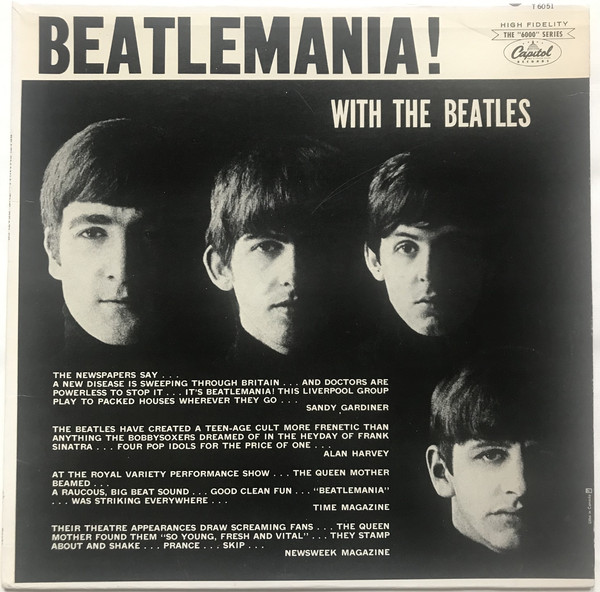
Oh, BTW, I received another album that same Christmas, Beatlemania, by a new group from Liverpool, England. I really liked “I Saw Her Standing There.”

Successful Aging a book whose time has come

by Rick Young

When I retired from a 30-year teaching career in 2008, I was always quick to remind people that I was only retiring from teaching high school History, not from life.

At age 57, I had plenty of productive years ahead of me and lots of things on my bucket list. I wanted to pursue more freelance writing opportunities. I wanted to spend more time playing my drums. And, most important, I wanted to spend more time with my life-partner, Val, and my two lovely granddaughters.

A year later I was writing freelance for a local marketing firm, submitting articles to several local magazines, jamming with as many musicians as possible, and spending many precious hours spoiling my granddaughters. By October 2009, I was publishing a monthly independent arts publication called The Beat Magazine.

Now in 2020, at age 69, I think I am living a pretty fulfilling life and have many older friends who are doing likewise.

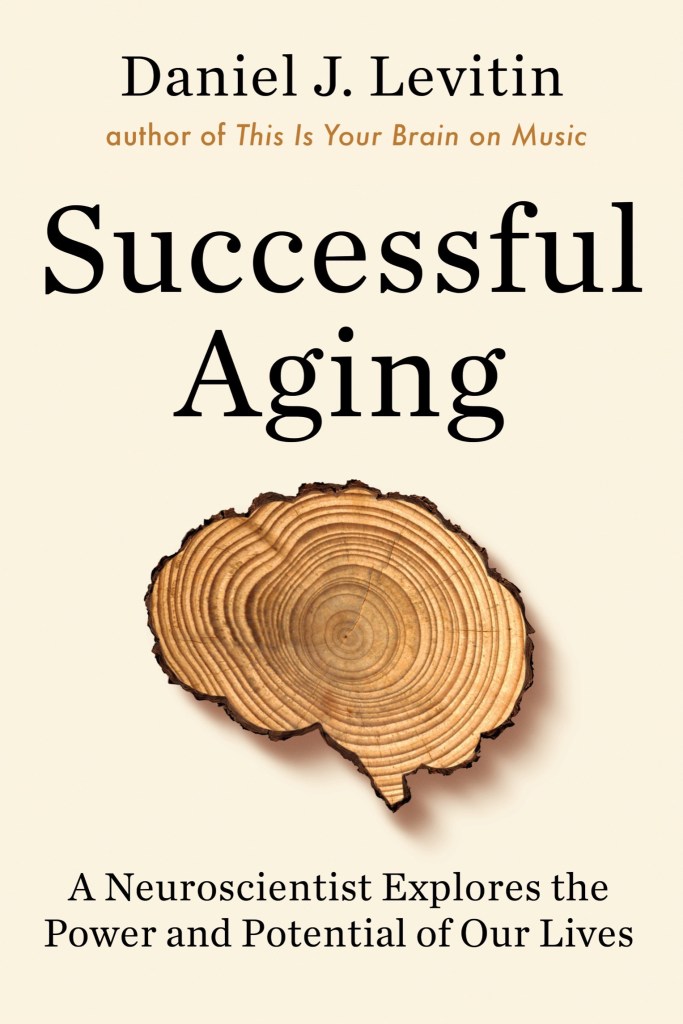
Thus, I applaud Daniel Levitin’s new book, Successful Aging: A Neuroscientist Explores the Power and Potential of Our Lives, with its call for a new approach to how society thinks about aging and older people. It is a welcome addition to the growing canon on aging. In a society and culture that have permitted ageism and outdated perceptions of its older members to endure far too long, Levitin’s book is a clarion call to action.

Levitin is a neuroscientist and cognitive psychologist who is the Founding Dean of Arts & Humanities at the Minerva Schools at KGI in San Francisco, and Professor Emeritus of psychology and neuroscience at McGill University. His previous books, This Is Your Brain on Music, The World in Six Songs, The Organized Mind and A Field Guide to Lies, are best-sellers. To be sure, his proven skills as a “popular” scientific writer are on full display in his new book.

Focusing on three main topics, Development of the Human Brain, Choices and Longevity, Levitin eschews the traditional belief that with aging comes inevitable physical and mental decline. He argues that “aging is not simply a period of decay, but a unique developmental stage that – like infancy or adolescence – brings with it its own demands and its own advantages.”

There are lots of scientific facts and statistics in the book, but certainly not too many to deter readers from finishing its 500+ pages. Levitin intersperses the hard evidence with dozens of case studies and examples from his research, as well as his own experiences. It all makes for a very interesting and informative read. Indeed, he provides plenty of motivation for readers to keep their minds active and engaged.

In light of the very real existential threat posed to those over 65 by the COVID-19 pandemic, Levitin’s refreshing inspirational interpretation of aging brings with it even more relevance and urgency. Older Canadians must not be seen as “expendable” as some politicians and business leaders would have us believe, nor must they be pitied or have targets on their backs.

With longevity increasing and more older Canadians enjoying full, satisfying post-retirement lives, Successful Aging: A Neuroscientist Explores the Power and Potential of Our Lives, is a timely book that should appeal to all age groups.

Remember, none of us is getting any younger and no one gets out of here alive.

Identity Theft — It could happen to you

Until recently I thought Identity Theft was something that only happened to people who were careless with their personal information and who fell prey to the myriad of telephone, mail and online scams floating around out there.

No more. It happened to me, and it could happen to you.

It all began when I received a call from someone claiming to be from the Fraud Prevention Department of MBNA Canada. The caller wanted to know if I had recently applied for an Amazon.ca MBNA credit card, to which I replied No.

She then informed me that someone had applied for one earlier this month using my personal financial information — or at least enough of it to apply for credit.

And, here’s the kicker. She told me that in order to cancel the card, I would have to answer some security questions to prove/verify my identity!

This request sent my spidey-sense tingling. Like most people, I have read all the warnings about never disclosing any personal information over the phone and/or online to strangers.

Since, on any given day, I receive several scam phone calls telling me that I have won non-existent cruises, warning me that a warrant is out for my arrest for unpaid taxes, or telling me a family member is in economic distress in a foreign country, I was immediately leery of this request and accused her of being a scammer and hung up the phone.

Within 15 seconds my phone rang again — same person, same spiel. This time she advised me to go to the MBNA Canada website while we were on the phone. At this point, I was beginning to wonder if she was legitimate and followed her advice.

To make a long story short, after about 15 minutes of conversation, she convinced me that the call was legitimate. By providing some personal information that only I would know, I was able to prove that I was who I said I was and that whoever applied for the credit card was a fraudster.

The fraudulent request for an MBNA credit card was rejected and canceled. End of story — right?

Nope.

In light of the fact that my personal financial information had been compromised, the MBNA representative advised me to contact Canada’s two credit bureaus (why do we have two?) — Equifax and Trans-Union and have them put Fraud Prevention Alerts on my credit profile.

I began with Equifax as it was the one I had heard of before. Since I am not one to be making large purchases or trying to build my credit, I have never requested a credit report or credit score. The process took about 30 minutes as I had to fill in online forms and provide security questions and so on and pay a fee of $11.95 for the privilege. The report indicated that no recent inquiries about my credit had been made. Just to be on the safe side, I ordered their monthly Credit Monitoring service which will permit me to check my credit regularly and will alert me if anyone (e.g. credit card fraudsters) inquires about my credit rating. This for a price of $19.95 per month.

Case closed. Right? Not so fast.

The next morning I had two dodgy looking characters appear on my front porch within one hour of each other claiming to be distributing menus from the local Domino’s Pizza. I knew this was bogus as they didn’t go to any other houses around me. A quick call to Domino’s confirmed what I suspected — they had no one in the neighbourhood distributing menus. My residence was being targeted, for whatever reason.

Assuming that the individuals were criminal door-checkers, I reported the incident to the local police and they told me a car would be sent out to look for them.

Story over? Not so fast.

After checking my mail, I came across an envelope with a spanking brand new RBC Visa Credit Card in my name.

After another grueling 30 – 45 minutes on the phone with RBC’s Fraud Prevention Department, I was able to prove that I did not apply for the card and it was canceled and I destroyed the card

I decided it was in my best interests to contact Trans-Union about what credit information about me they had in their files. Much to my chagrin, they informed me that two recent inquiries about my credit rating had been made — one from MBNA and one from RBC.

The dots were beginning to connect up.

I told the Trans-Union representative about the MBNA call and the unsolicited RBC credit card. He asked me if I had noticed anyone going through my mail recently as they may be cohorts of the scammer attempting to intercept the bogus cards.

Bingo!

After I told him about the two porch visitors, he suggested that I should protect myself by having my mail temporarily diverted until the threat of any further criminal activity passed. Since I now have Fraud Protection Alert protection with both credit bureaus, no further applications for credit using my name can be made without direct contact with me.

So, the costs of protecting myself from these and further fraud attempts have added up to well over $200.00. And still nobody (including my own bank) can explain to me how my personal financial information was compromised. Nor can they can guarantee that future fraudulent attempts won’t be made.

I have resigned myself to checking my credit information daily for peace of mind, if nothing else.

My advice? Be vigilant with your personal financial information and report any suspicious activity. You may even consider subscribing to one of the two credit bureaus.

Identity Theft can happen to anyone, as I have learned.