A retired History and Politics high school teacher (1978-2008). Former Publisher/Managing Editor of The Beat Magazine (2009-2014). Freelance Writer. Proud Grandfather.
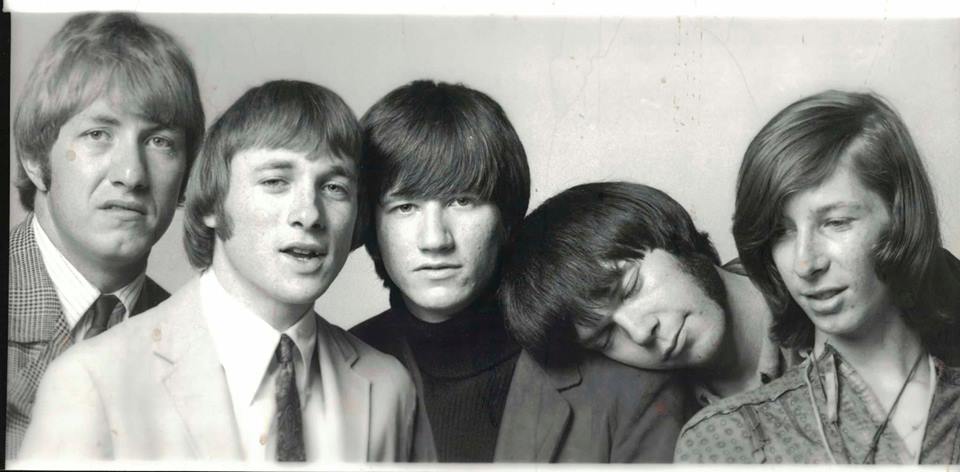
A recent Facebook posting about Buffalo Springfield’s founding in 1966 brought to mind a few things I’ve always felt about achieving so-called “fame and fortune” in the Music Industry.
As a long-time full-time, part-time and now casual professional musician since 1966, and a keen observer of the music scene, I offer up these comments for your consideration. Take from them what you will.
First, you must have Talent with a capital T. All the fancy websites, Facebook pages, flashy PR and promo merchandise in the world will only get you so far. If you don’t have the goods, you will likely have limited, short-term success.
Second, as they say, “It’s all about timing.” Being in the right place, with the right people, at the right time will probably go far in helping you achieve a modicum of “fame and fortune” and the respect and recognition of your peers and general public. BTW, these factors were very evident in the founding and, if only short-lived, success of Buffalo Springfield.
Third, a good deal of personal humility is probably a good thing, especially when you are first starting out. There are lots of “Legends in Their Own Minds” around blaming everyone else but themselves for their lack of success.
Fourth, perseverance is a quality which will probably help you achieve whatever level of success you are aiming for. Don’t throw in the towel too early. Most reputable, well known musicians were not overnight successes. They had to pay their dues, put in their time in lousy bars, etc. On the other hand, know when to call it a career when it’s time.
I knew that it was time to for me come off the road and pursue a teaching degree in the mid-1970s. Since then, I have had no regrets following a successful and highly satisfying 30 year career teaching high school History.
And finally, let’s face it, some good old-fashioned luck will probably play itself into the “fame and fortune” equation.
Just some musings from an aging 1960s hippie musician.
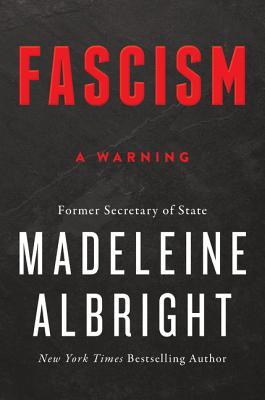
Former US Ambassador to the United Nations and Secretary of State under Bill Clinton, Madeline Albright, pulls no punches in her cautionary book Fascism: A Warning (Harper/HarperCollins Publishers, 288 pp.).
Drawing on her personal experiences as a child in war-torn Europe, her time in government and conversations with her students at Georgetown University where she serves as professor of International Relations in the university’s School of Foreign Service, Albright traces the history of Fascist states and leaders between the end of World War I and now.
In her introductory chapter Albright acknowledges that recent international developments suggest that democracy, once heralded as the undisputed future of humankind after World War II in 1945 and the Fall of Communism in 1989, is “under assault and in retreat” around the world.
She suggests that the recent emergence of strong men and populist leaders around the world is evidence that Fascism is making a comeback of sorts.
Having said that, Albright attempts to explain the meaning of “real Fascism,” positing that there really is no universally agreed-upon definition of the term. Drawing upon discussions with her students, Albright concludes that “Fascism should perhaps be viewed less as a political ideology than as a means for seizing and holding power.”
Madeleine Albright served as secretary of state under President Clinton from 1997 until 2001.
She also states: “To my mind, a Fascist is someone who identifies strongly with and claims to speak for a whole nation or group, is unconcerned with the rights of others, and is willing to use whatever means are necessary – including violence – to achieve his or her goals. In that conception, a Fascist will likely be a tyrant, but a tyrant need not be a Fascist.”
But more importantly, she wonders aloud “Why, this far into the twenty-first century, are we once again talking about Fascism?”
Her answer?
“One reason, frankly, is Donald Trump. If we think of Fascism as a wound from the past that had almost healed, putting Trump in the White House was like ripping off the bandage and picking at the scab,” she says.
Describing herself as “an optimist who worries a lot,” the author expresses her concern over Trump’s election and the actions of the self-proclaimed “stable genius” during his first year and a half in office.
At this point she leaves Trump behind, promising to get back to him towards the end of the book, and launches into her survey of past and present strong men and their regimes.
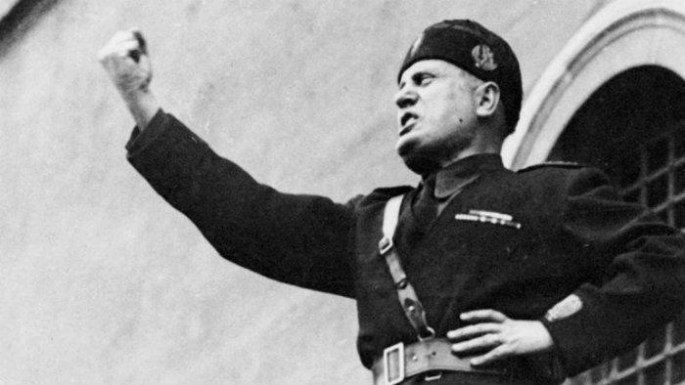
Italy’s Mussolini ( the father of modern Fascism), Nazi Germany’s Adolf Hitler, Russia’s Joseph Stalin, Bosnia’s Slobodan Milosevic, North Korea’s Kim Il-sung and his son Kim Jong-il, and others, are all analyzed in terms of what contributions each made to modern Fascism.
That line leads directly to Donald Trump, the man who now occupies the US White House.
While stopping short of calling Trump a Fascist (as many have), Albright warns that the United States is headed in that direction.
“Decades ago, George Orwell suggested that the best one-word description of a Fascist was ‘bully,’ and on the day of the Normandy invasion, Franklin Roosevelt prayed to the Almighty for a ‘peace invulnerable to the schemings of unworthy men.’ By contrast, President Trump’s eyes light up when strongmen steamroll opposition, brush aside legal constraints, ignore criticism, and do whatever it takes to get their way.”
Now that Trump has declared a “National Emergency” to build the Border Wall between the United Sates and Mexico he promised during the 2016 campaign, how much closer is America to becoming a Fascist state?
Only time will tell.
Albright’s book is a welcome addition to the growing canon on Fascism. It should be compulsory reading for all thinking Americans.
I just went through that unpleasant periodical ritual that most of us experience at least several times during our adult lives: Searching for a new car to replace one that is coming to the end of its road-worthiness.
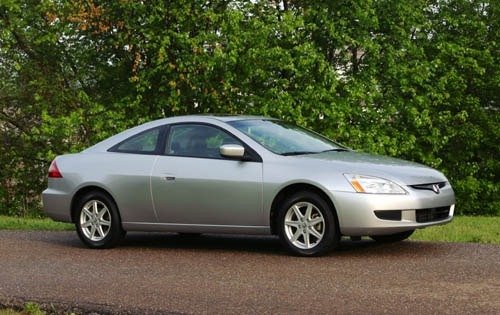
In my case, my 2004 Honda Accord V6 still runs and looks great. And it can still pass just about anything on the road 14 years after I bought it new.
But, lately the service and repair bills have been increasing in frequency and in cost. I guess it’s what inevitably happens when products are built for planned obsolescence in our consumer capitalist society.
So, it was with the usual trepidation, I started doing my research for a viable and affordable replacement.
The first thing I noticed was that to replace my car with a comparable new Honda Accord would be tantamount to buying a new house and with a monthly payment to match any mortgage. Something I am not prepared to do as a 67-year-old retiree.
Indeed, I’m not even sure a car dealer would finance me for the full length of the so-called incentive packages they offer these days – up to 84 months (or 7 years)!
The second thing a potential new car buyer needs to know is that the MSRP (Manufacturer’s Suggested Retail Price) just applies to the basic model, and it doesn’t include taxes, freight charges, licensing and all of those other extra charges dealers pile on the cost of a new vehicle.
Add all of these charges, plus the charges for financing if you go that route, in and you’re looking at thousands of dollars more than the MSRP.
And, finally, third, there is the whole negotiating process or “dance” you must endure with the dealership once you have decided on a potential new vehicle purchase.
The closest thing comparable to buying a new vehicle is the purchase of a house. In both cases, it’s Caveat emptor or Let the buyer beware.
Now, with all due respect to Car and Real Estate Sales Reps (or Specialists, or whatever the current job label is), I know you have a demanding (some would say shitty) job that requires you to prey upon the emotional insecurities of your customers. But haggling with you over thousands of dollars on the purchase of a home or new car is not a pleasant experience for most buyers.
For some buyers, it can be downright stressful and intimidating.
In a word, the whole appraisal of your trade-in, make us an offer, let me check it with my manager and so on process, well, sucks.
In my case, I settled on a 2018 demonstrator HRV at a local Honda dealer. It was the perfect vehicle for my needs at this time and I figured we could grow old(er) together.
During my first meeting with the sales rep, we reached what I thought was a reasonable price for my trade-in, figured in all available rebates and discounts, and came up with a “Final” price, open for further negotiation.
I told the rep, who was an extremely helpful young man very interested in working with me to make the purchase happen, I needed some time to think it over.
Four days later, I made my second trip to the dealer armed with my “Final” offer based on a cash purchase.
Well, after submitting my offer and asking for a simple Yea or Nay, the sales rep said he would have to clear it with his Manager. He suggested I take the sub-compact SUV for another drive while he did that.
Upon my return, the sales rep was waiting for me with two sheets of paper in his hand – one a revised appraisal on my 2004 Accord, and the second a revised “Final” cost on the HRV.
Well, lo and behold, my trade-in was now worth almost $2000 less than it was four days earlier and the new bottom line was almost $2500 more than what we had agreed upon.
I informed him that was not good enough and walked away from the “deal.” I could tell that he was exasperated, but in the end: “The customer is always right.” So I didn’t waste too much time worrying about it.
Minutes after walking out of the dealership, I felt like a 500 pound gorilla had been removed from my shoulders. I had not purchased emotionally or impulsively and I still had a car that was road-worthy and probably good for a couple of more years thanks to Mike and the good folks at Village Auto Care in Wortley Village.
Will I revisit the whole ritual at some point in the near future? I guess I’ll have to monitor what those repair bills look like in the next twelve months.
I would like to hear about your experiences buying a new car. Were they similar to mine? Dramatically different? Whatever.
As a former high school History teacher, I am only too familiar with the horrific details of the Holocaust — the concerted attempt by Adolf Hitler’s Nazi regime to exterminate Europe’s Jewish population by any means necessary during the Second World War.
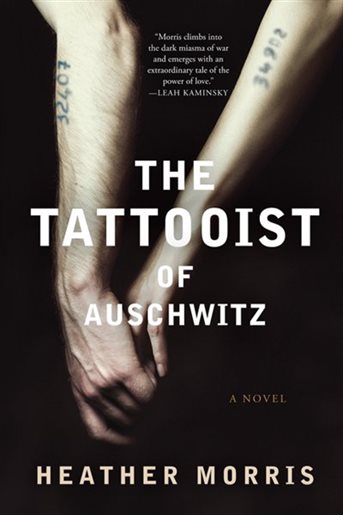
Thus, it was with some trepidation that I picked up the best-selling novel, The Tattooist of Auschwitz by Heather Morris.
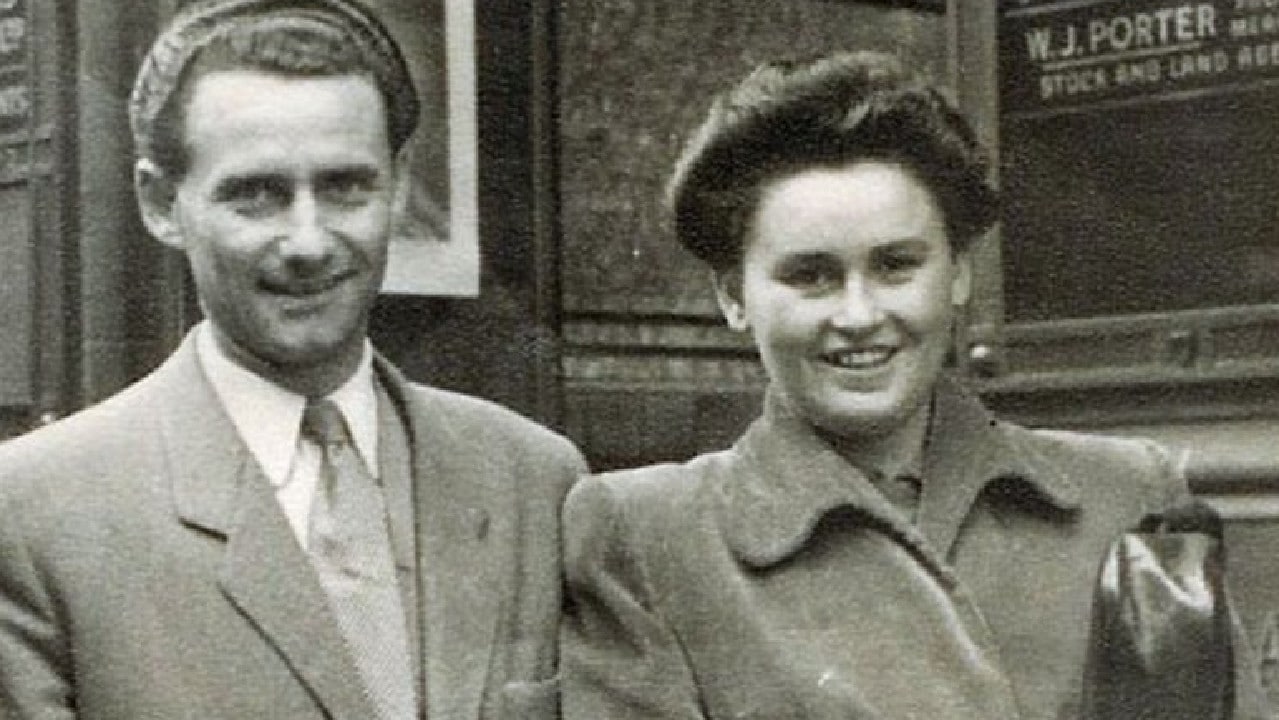
The book is an account of the struggles of real-life
Holocaust survivor, Lale Sokolov – the tattooist of the book’s title – to stay
alive in the infamous Auschwitz-Birkenau concentration camps using his wit and
cunning, while at the same time pursuing an improbable, but bitter-sweet,
romantic relationship with a fellow Slovakian Jewish inmate named Gita Furman.
It is a story of human suffering and man’s inhumanity to
man, but also one of hope, love and endurance.
Critics have not been kind to the book.
Many, like the Auschwitz Memorial Research Centre, claim that “the book contains numerous errors and information inconsistent with the facts, as well as exaggerations, misinterpretations and understatements.”
The Guardian’s critic Jane Housham referred to the book as a “glossing over of the concentration camps’ unremitting misery with sugary romance.”
Fair enough, but The Tattooist of Auschwitz is clearly labelled “A Novel” on its front cover. To approach it in the same manner as a non-fiction historical account is unfair and sure to be disappointing.
We’re all familiar with movies that include the preface: “Based on a true story.” Well, that’s what this book is — a story based on the first-person reminiscences of 87-year-old Holocaust survivor Lake Sokolov. Like all first-person accounts, it may have its intrinsic problems.
Having said that, does its historical inaccuracies detract from the novel’s effectiveness in telling a good story while at the same time introducing many readers to the horrors of the Holocaust for the first time?
I think not.
Indeed, historical fiction is a controversial genre as evidenced by a recent New York Times piece about ‘The Tattooist of Auschwitz’ and the History in Historical Fiction. To read this article, click here.
In short, it is best to approach the book as an historical novel based on the experiences of a real-life Holocaust survivor. Viewed in this way, I can say with confidence that this novel should become a welcome addition to the Holocaust canon.
If it encourages readers to pick up a non-fiction account of the Holocaust, that’s even better.
I give The Tattooist of Auschwitz 4 Stars out 4 and highly recommend it.
Rick Young, January 23, 2019
Addendum: When I began teaching high school History in the late 1970s, I took it upon myself to interview several local Holocaust survivors for use with my students when we covered the topic. To be sure, it was one of the most humbling and moving experiences in my life.
Unfortunately, in my moves to four different schools during my 30-year career, the taped interviews got lost in the shuffle.
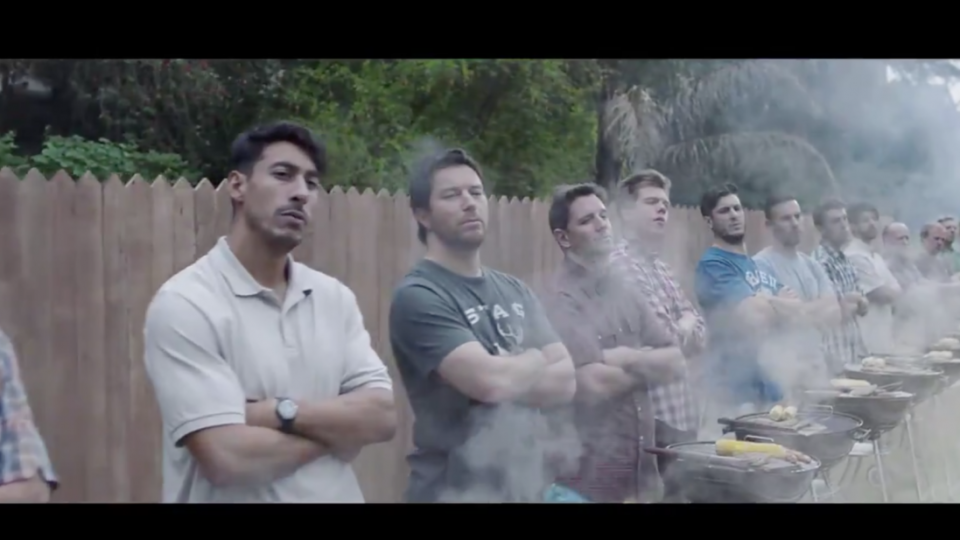
By now, you have probably seen the Gillette television ad, “The Best Men Can Be.”
If not, watch it before you read this Blog.
I have hesitated to comment on the controversial so-called Gillette “Toxic Masculinity” commercial for a couple of reasons — not least among them, the prospect of being labelled a “toxic male.”
But it’s time to weigh in, so let’s get started…
First, the use of the
term “Toxic Masculinity” is, for me, a “red flag” or “buzz word” in that it
demonizes all males with one wide brush stroke.
Masculinity, as defined
by the Urban Dictionary, is: “…an aspirational and normative style of
being and living as a natural-born man that a critical mass of the members of
that population applaud.”
Toxic is: “used
to describe a person who is tainted by a subconscious malevolence or psychosis
that affects the lives of those who come into contact with them.”
Put them together and
you end up with: “A social science term that describes narrow
repressive type of ideas about the male gender role, that defines masculinity
as exaggerated masculine traits like being violent, unemotional, sexually
aggressive, and so forth.”
Now, I support the underpinnings
and goals of the modern #MeToo movement as much as the next person. But, to
have the term “toxic masculinity” thrown in my face if I tell an off-colour
joke, watch an afternoon of football on TV, or use the phrase “Be a man” off -the-cuff
is a bit much.
To use the term in a
corporate ad to boost sales of a sagging product smacks of capitalist
opportunism.
Second, as much as I don’t like them, I have grown accustomed to ads that portray men as stereotypical “lovable, clueless oafs or the alpha male who gets the girl.”
Now, I know that the cosmetics industry has traditionally
inundated women with ads suggesting that they are inadequate and in need of
betterment, usually regarding their physical appearance. Just think of the
endless ads for moisturizers and creams to fix wrinkles, hair colouring to hide
the gray, concealer for under-eye bags and endless diets to shed that fat.
Personally, I find these types of ads offensive and an
affront to my female friends and relatives.
Frankly, I find Gillette’s
attempt to tell me that something’s broken and I need to work to fix
it just as offensive.
Yes, I am very aware that there are some bad hombres out
there. But is it my job to show them the error of their ways and set them on a
different path?
As a former high school teacher and football coach, I always
felt that I was a role model to my male students and players, whether I
wanted the job or not.
Without preaching, I was
quick to point out and correct what I thought was inappropriate behaviour on
the part of my male students and players towards their female counterparts, but
to refer to any of them as toxic?
Nope.
And I don’t need Gillette
or any other corporations telling me what to do in their pursuit of higher profits.
And, third, at the risk
of being called a “Snowflake,” I am miffed at being called “part of the problem”
and told I need to “get my head checked” if I dare question the contents and
motives behind the Gillette ad.
Gillette representatives, themselves, say, “the controversy
was not the intended goal of the ad, which is part of a larger campaign that
takes a look at redefining Gillette’s longtime tagline The Best a Man Can Get.”
In short, if the ad ends up hurting the company’s sales, you can bet it will be pulled regardless of its positive underlying message.








 Richard's Blog