The Beat Magazine Q&A Interview with Brian Speagle, Director of Scooter Productions’ Memoir

by Richard Young

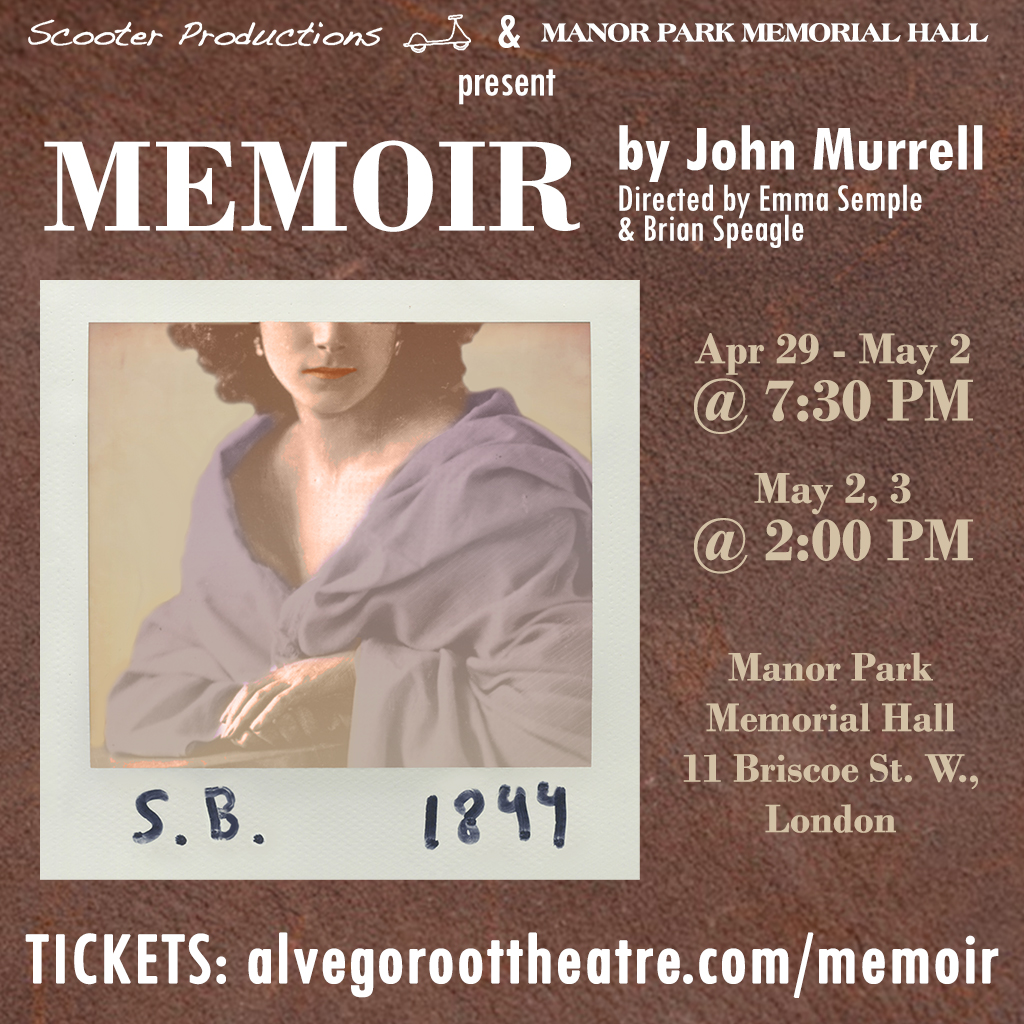
What follows is a Q&A Interview with Brian Speagle, Director of Memoir playing at the Manor Park Memorial Hall from April 29 to May 3. The Interview was conducted by The Beat Magazine’s Publisher & Content Manager, Richard Young.

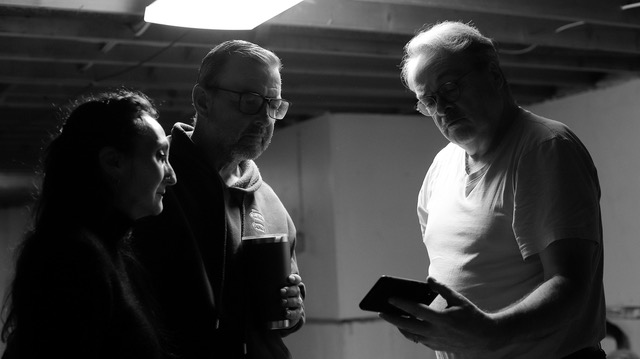
(Pictured: Director Brian Speagle with Charlene McNabb and Dan Curtis.)

Q. Tell me about Memoir – backstory, author, performance history, etc.?

Memoir is set in the summer of 1922. It will prove to be Sarah Bernhardt’s last. The action of the play takes place at her island estate off the coast of Brittany, France. Sarah, with her secretary and assistant Georges Pitou, is doing her best to remember events from her life to be included in volume two of her memoirs. Sarah Bernhardt dominated the world of theatre for most of her life, in France, all of Europe, and North and South America. The Divine Sarah achieved worldwide fame in the 19th century, which was unprecedented. Sarah Bernhardt was known as much for her personal life, which today would have been tabloid and internet fodder, as for her multitude of on-stage personas.

Canadian playwright, the late John Murrell, premiered Memoir at the Guelph Spring Festival in 1977. It has since been presented in the UK, Ireland, Japan, and the U.S. It enjoyed a two-year run at the Theatre Edouard VII in Paris. The play has also been adapted for TV and film in Canada, Europe, and Asia.

Q. What prompted you to select Memoir for your 2026 season?

I first came in contact with this play in 1978, when I was in a scene study class at university. I played ‘Pitou’ in a few scenes! I also used Memoir in my teaching career with senior drama students. After forty-five years, I decided it was time to direct this show.

Q. Could you provide a brief Plot Synopsis

Sarah Bernhardt is trying to write volume two of her memoirs. She enlists Pitou to play characters from her past, to jog her memory. At first reluctant, Pitou eventually begins to revel in his roles. As the play proceeds, however, many of her memories become painful and traumatic for her. In the end, Sarah comes to accept her life decisions, and the play ends on an optimistic note.

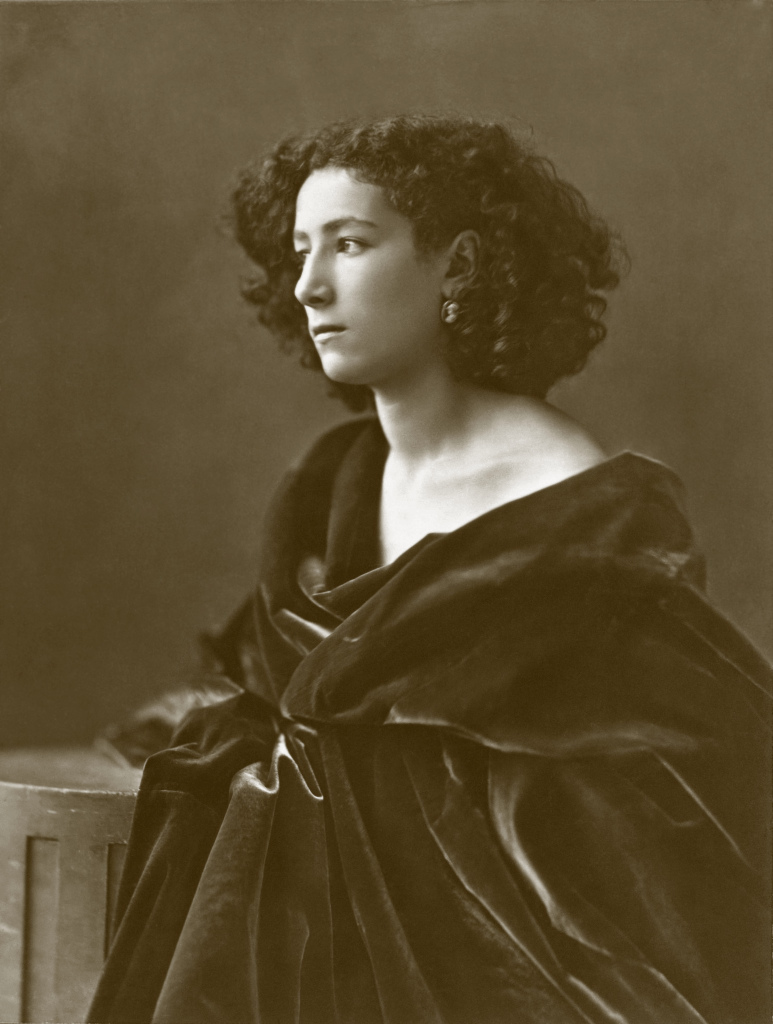
(Pictured: Sarah Bernhardt.)

Q. It’s my understanding that Sarah Bernhardt performed in London. How, if at all,  does this play into the show?

Sarah’s appearances at the Grand Opera House in London, Ontario, do not play directly into the show. However, she may have worked closely with a local stagehand or two! You’ll have to see the show to find out!

Q. Two-character plays can sometimes present significant challenges to the actors. Comment?

The text of Memoir presents a major challenge for actors. The ‘Sarah’ character is on stage for the entirety of the action. It is physically and emotionally demanding for both actors.

Q. Could you say a few words about your actors – Charlene McNabb and Dan Curtis?

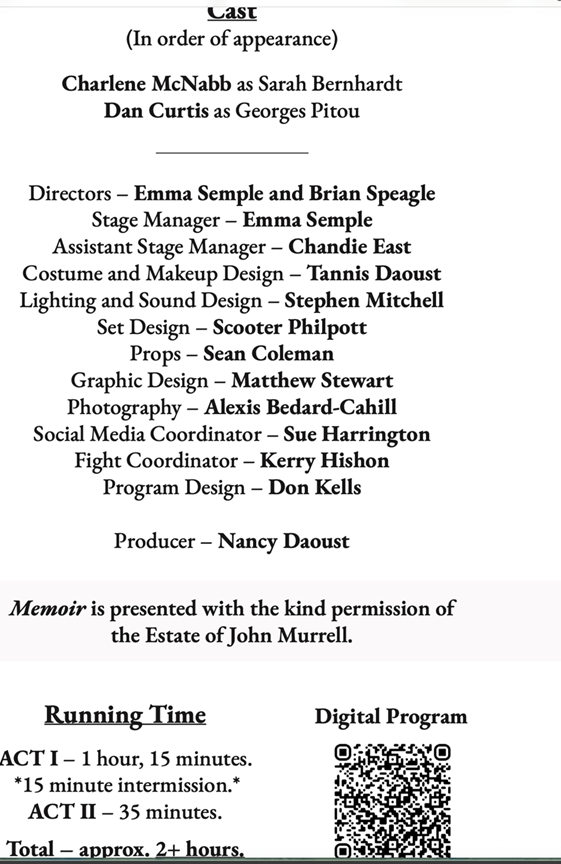
I first presented Charlene and Dan with this script in 2019! We were hoping to produce it in 2020. Well, we know how that turned out! After seven years, we are all quite enthused to finally stage Memoir for London audiences. Throughout the rehearsal process, Charlene has been totally committed to faithfully developing ‘Sarah!’ She has done extensive research into the amazing life of her character, and that background dedication shows in her portrayal. Dan Curtis takes on the demanding role of ‘Pitou’ with aplomb, as he does with every character I’ve seen him portray. He plays several characters within the character of ‘Pitou,’ sometimes switching back and forth within the same sentence. Quite amazing to witness. Charlene and Dan are both experienced actors, and their professionalism is first-rate.

Q. Why did you choose Manor Park Memorial Hall for this run?

Manor Park Memorial Hall was, for me, the natural choice for this show. The set design invites the audience into an intimate environment with the actors. We are doing something different with the seating, which theatregoers will notice as soon as they enter the space.

Q. How would you describe the sets, props and costumes of the play?

The set is minimal, a few flats. Most of what the audience sees onstage is furniture and props. Tannis Daoust, our costume designer, has done her research for the historical era of the show, and the results are wonderful.

Q. What can audiences expect from Memoir?

The audience can expect some laughs and some tears. I hope they learn something about Sarah, the complexities of her life, and the contradictions. They will also notice the strong bond between Sarah and Pitou as the play unfolds.

Q. Is there anything else you think readers should know about Memoir?

Murrell does take some poetic license with Sarah’s life. For example, in reality, Pitou was not in Sarah’s service at the end of her life.

About Scooter Productions:

Scooter Productions was formed in 2017. Founding members are Phil Cal, Heather Rivet, Sherine Thomas-Holder, and Brian Speagle. Scooter Productions encourages and supports all of the arts in southwestern Ontario.

Share this:

Customize buttons

Related

Introducing Scooter ProductionsSeptember 27, 2025In “art”

London Fringe – The Turing Test reviewed by Brian Speagle.August 16, 2025Liked by 1 person

REVIEW – SHAKESPEARE’S OZ BY BRIAN SPEAGLEJuly 25, 2025Tagged theatreEdit”The Beat Magazine Q&A Interview with Brian Speagle, Director of Scooter Productions’ Memoir”

Unknown's avatar

Published by Richard Young

A retired History and Politics high school teacher (1978-2008). Former Publisher/Managing Editor of The Beat Magazine (2009-2014). Freelance Writer. Proud Grandfather. View all posts by Richard Young

Post navigation

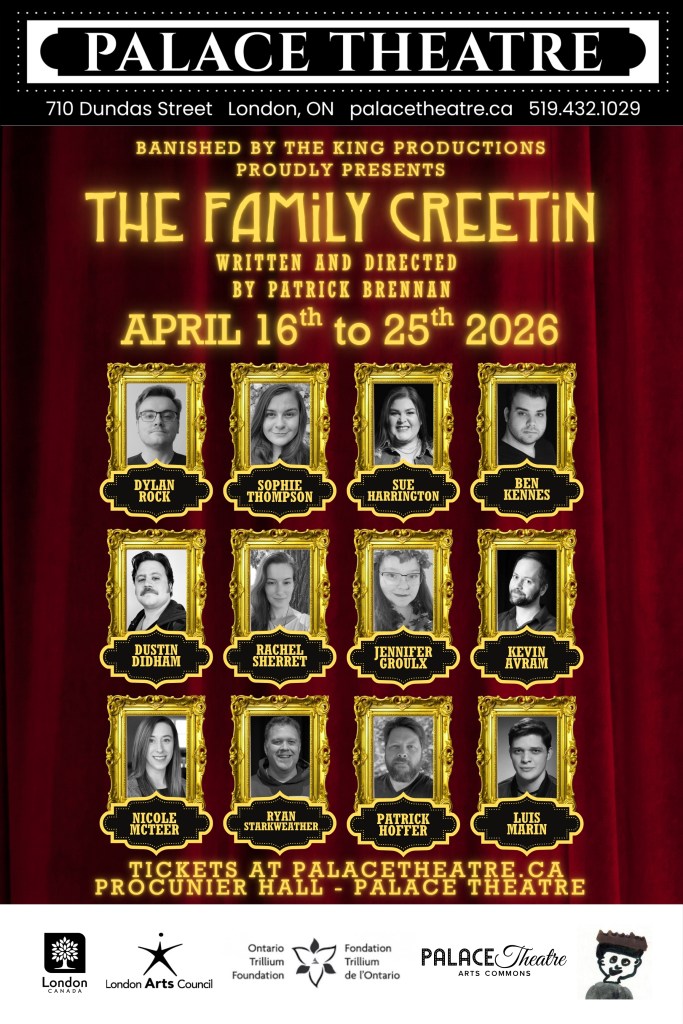
Q&A Interview with Patrick Brennan, Author and Director of The Family Creetin.

by Richard Young

What follows is a Q&A Interview with Patrick Brennan, author and director of The Family Creetin, playing at the Procunier Hall at the Palace Theatre from April 16 to 25. The Interview was conducted by The Beat Magazine’s Publisher & Content Manager, Richard Young.

Q. Tell me about The Family Creetin – backstory, author, and performance history.

The Family Creetin was born out of a few places and ideas. I was always enamoured with the golden age of British detective fiction, particularly Lord Peter Whimsey in Dorothy Sayers string of novels and the ridiculousness of self-seriousness. I’ve been writing shows since 2012 for Banished by the King and have always skewed to the less serious, more character-driven work. I like finding the fun in how characters interact. For our theatre group, we were always looking for large, gender balanced shows and the prospect of a single set, big cast, whodunnit-type show was such a natural fit. I loved giving every character the spotlight through the show, and the range of the roles was a lot of fun to play with. Just a mass of ridiculous and self-important people that played on some tropes with some hopeful plot twists, and this show is a good, fun night out.

Q. Could you provide a brief plot synopsis?

In The Family Creetin, a group of six siblings and their significant others are called home by their father, a Duke that owns a massive food canning empire, for a mysterious reason. They fight, bicker, and snipe at each other before the Duke makes known his plans, and a frantic search for a thief begins!

(Pictured: Patrick Brennan, author and director of The Family Creetin.)

Q. Does the Family Creetin have any real-life counterpart?

I have heard it said that it is Downton Abbey-meets-Arrested Development, and that’s high praise! I began watching Downton Abbey weeks before the show originally opened in 2015, having written it a year before and was shocked by how many character names they stole from me!

Q. How would you best describe the play?

The play is a comedy, though I’ll leave that up to the audience. If there’s a message, I hope it is that a bit more kindness and empathy are never misplaced.

Q. I see that the play was performed at TAP back in 2015. Why are you reviving it in 2026? Any major revisions to the script?

We originally ran the show back in April of 2015 and thought eleven years was the perfect amount of time for people to forget the story and pay for another ticket to come see it again! This script is more polished and, as with the first, improved with rehearsals. We have had the advantage of two exceptionally creative, funny, and inventive casts running through this script, and, with complete control over the material, we have always encouraged and applied suggestions and adlibbing – if it’s funny, it stays! I couldn’t be more grateful to all of the moments, small and large, that these actors have put into making the show better, rehearsal after rehearsal.

Q. Why have you chosen Procunier Hall for this run?

The space is ideal for the single room, tight quarters, crucible of the show! And it was available.

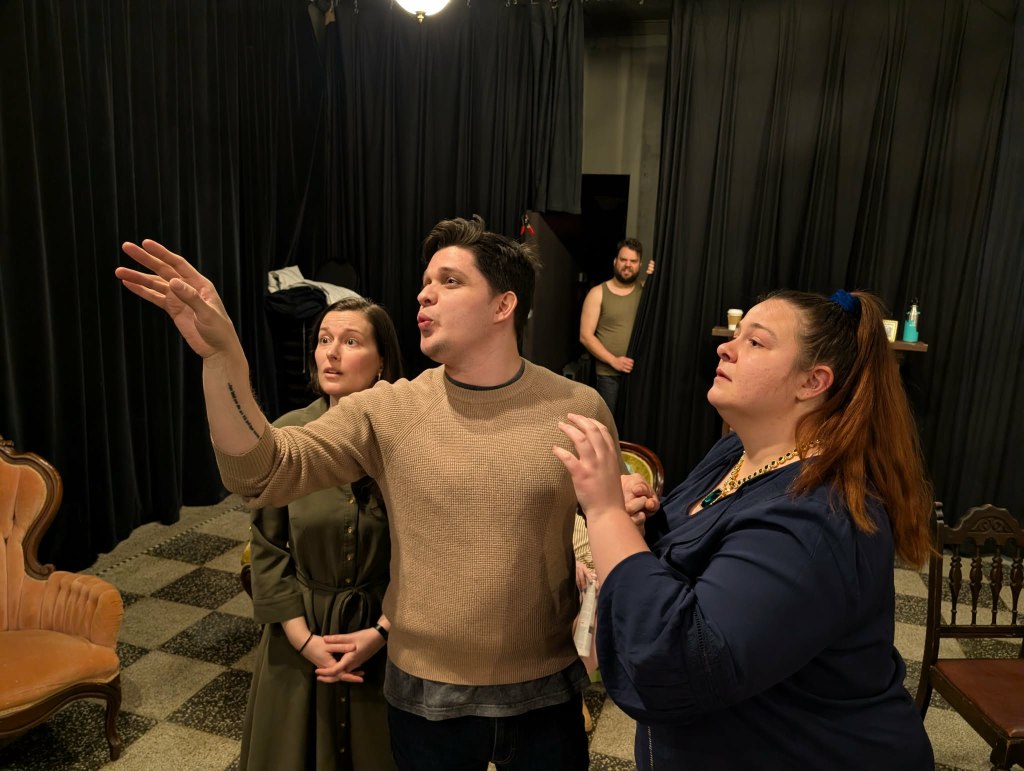
(Pictured: Rachel Sherret, Luis Marin, Sophie Thompson, and Ben Kennes.)

Q. How would you describe the sets, props and costumes of the play?

The Palace Theatre has been exceptionally generous with its set pieces, props, and costumes to make a very immersive sitting/drawing room environment for interwar England. We also have incredibly talented cast members who stitch, sew, bring props, and put a full effort into making their characters look as good as they perform them.

Q. What can audiences expect?

I would hope audiences take away some laughs, a bit of an escape, and maybe a line or two that sticks with them! Our performers, whether in the spotlight or awaiting their next line, make it a veritable Where’s Waldo of moments, faces, and bits that make multiple viewings a must.

Q. Is there anything else you think readers should know about The Family Creetin?

The Family Creetin has been so incredibly special to me personally. Not only was it my second script for Banished by the King, allowing me to work with my brother, Sean, and so many others in the group, but it was also where I met my would-be wife, Amanda. I was a self-absorbed, wannabe industrialist with an embarrassing secret, and she was a strong-willed, opinionated, in-your-face American dancer from the silent film era. A match made in heaven, and one for which I absolutely love this show. Also, there’s a sequel!

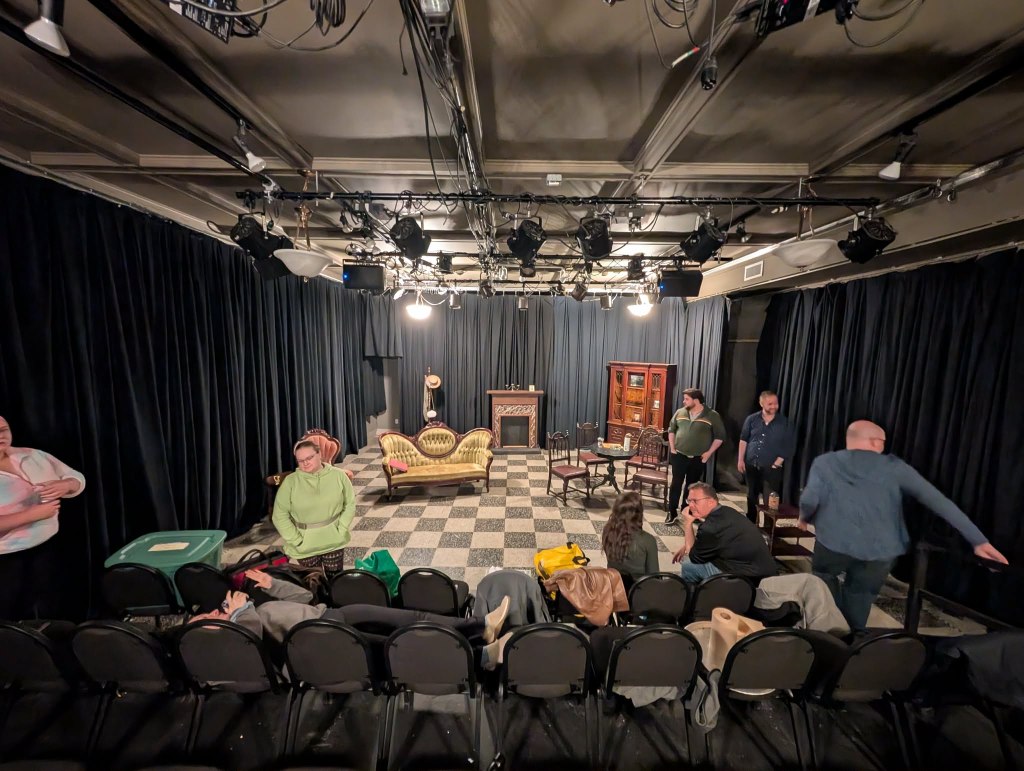
(Pictured: The Family Creetin set in Procunier Hall.)

Cast and Crew of The Family Creetin:

Cast:
Patrick Hoffer – Archibald
Sophie Thompson – Victoria
Ben Kennes – Reginald
Sue Harrington – Gloria
Dylan Rock – Frederic
Kevin Avram – Bertrand
Jennifer Groulx – Sybil
Ryan Starkweather – Roger
Luis Marin – Raul
Rachel Sherret – Mary
Nicole McTeer – Ginger
Dustin Didham – Nigel

Crew:

Directed By: Patrick Brennan
Produced By: Dan Curtis
Stage Manager: Jeremy Hewitson
Lighting Design By: Mark Mooney
Sound Design By: Doug Deschenes
Costume Design By: Tannis Daoust.

IF YOU GO:

What: Banished By The King Productions presents The Family Creetin.

When: April 16 to 25, 2026.

Where: Procunier Hall at the Palace Theatre, 710 Dundas Street, London, ON.

Tickets: https://mytickets.palacetheatre.ca/eventperformances.asp?evt=527

About Banished By The King Productions:

Banished By The King Productions has been creating original and unique theatre in London, Ontario, since 2009. Since the initial banishment, Banished has produced eighteen original works, all written by local London, Ontario, playwrights.

It all started as a dream to continue to produce, write, and act in shows after graduating from university. Many of our original and founding members attended King’s University College, and thus, once our studies were over, we became Banished By The King. Over the years, the group has morphed and grown to include the talents of many members of London’s thriving community theatre scene.

In 2024, we became the Theatre Company in Residence at the Palace Theatre Arts Commons to continue to create new theatrical productions and promote original London-based work.

Website – www.banishedproductions.ca

Q&A Interview Conducted by Richard Young, Publisher & Content Manager of The Beat Magazine 2025.
Community Art Groups: Camaraderie, Education, and Exposure

by Richard Young

By Beth Stewart

London has a richness of community art groups, including the Brush and Palette Club, the Gallery Painting Group, the Lambeth Art Association, and the London Community Artists.

While each occupies a unique niche, all provide camaraderie, education, and exposure.

The Brush and Palette Club (B & P), formed in 1972, grew out of painting sessions organized by artist and teacher Dorthy Heaven. By 1989, the small group had grown to 50; current membership is capped at 110 for practical reasons, and it has a healthy wait list.

B & P Publicity Convenor Marilyn Kidd says many artists join the club because art making can be an isolating activity. Membership allows them to be “stimulated, motivated and inspired.” She says members enjoy participating in art-related activities with the group and “growing together as they learn about new painting techniques.”

The club meets monthly, except for July and August, at Riverside United Church. Members enjoy presentations by invited speakers, trips, and seven hands-on workshops in a variety of media per year.

(Pictured: Brush and Palette artist Linda Deckert’s “High on a Windy Hill”, acrylic, 24 by 28 inches.)

The club strives to provide a supportive environment for members, to provide opportunities to broaden artistic skills, and to promote visual art in the community at large.

What differentiates the B & P Club from other art groups is the nature and quantity of its activities. Each meeting has an invited guest who speaks on a wide variety of topics relating to art. The meetings are also social occasions with time for friendly conversation and interaction during a coffee break. As well, there are two club luncheons each year.

An annual show and sale gives members a specific event to work toward. Working together at the show creates a deep bond as members all pull together to make the event a big success.

The Brush and Palette Club’s next Art Show and Sale is April 9 to 11 at Riverside United Church.

(Pictured: Brush & Palette artist Alice Price-Vermeulen’s “Palimpsest”, mixed media, 12 by 12 inches.)

Kidd joined the group in 2012. She says, “Being a member has encouraged me to persevere and to grow as an artist, and I have benefitted from the friendship and support of other members.” She is also a long-time member of the Gallery Painting Group, where she enjoys “plein air” work. She says, “Each group offers various advantages, and I would not give up either of them!”

For additional information, visit: https://brushandpaletteclub.com/

The Gallery Painting Group (GPG) was formed in 1953 at the recommendation of the president of the Western Art League, which was founded in 1876 to promote art in London, Ontario

It includes 70 local artists who enjoy the plein air painting experience, which is the act of painting outdoors. From May to October, members of the group paint on location on Tuesday and Saturday mornings at various locations in and around the London area.

(Pictured: Gallery Painting Group artist Wendy Reid’s “Off the Trail”, oil pastel on black paper, 9 by 12 inches. From a plein air day at Springbank Park.)

As members interact frequently, official meetings are limited to two per year.

Marily Kidd says, while the group has fewer meetings, members interact frequently from May to October while painting together outdoors in and around London in “fascinating and diverse locations.” Because it’s a smaller group, the sense of community is strong.

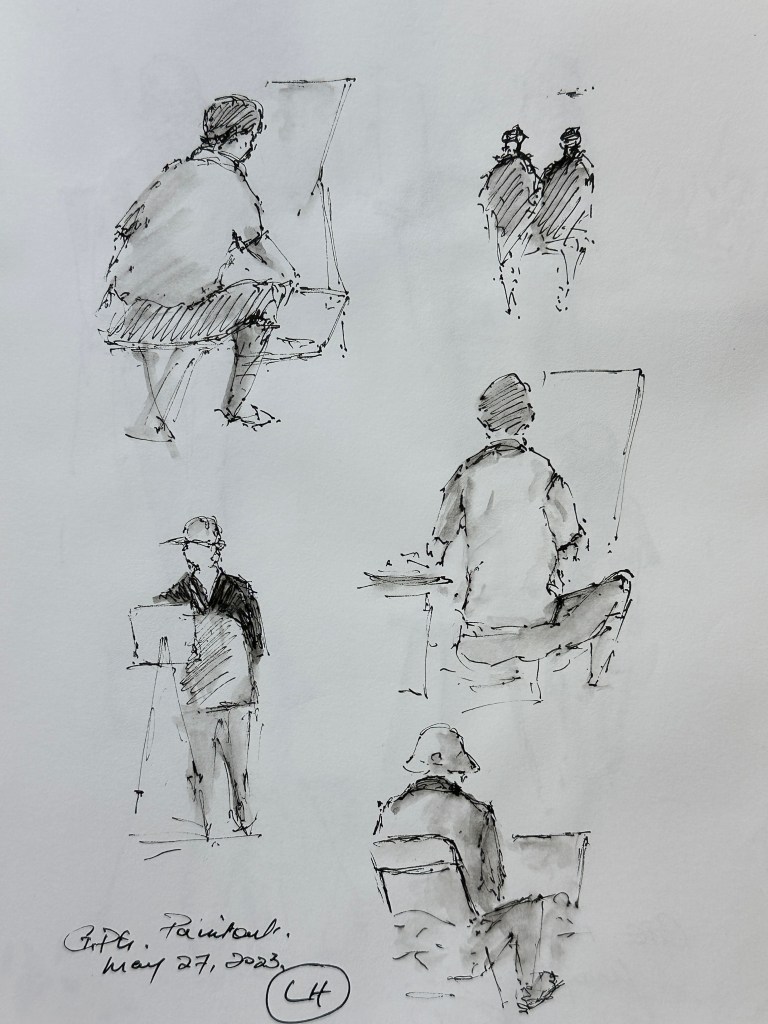
(Pictured: On location sketches by GPG artist Len Hughes showing members at work.)

Each fall, the GPG holds a show and sale of the paintings produced by its members throughout the summer. Their next show will take place at First Street. Andrews United Church, October 22nd to 25th, 2026.

For additional information, visit: https://www.gallerypaintinggroup.com/ or interact with the GPG on Facebook: https://www.facebook.com/londonpleinair/

The Lambeth Art Association (LAA) provides support for established and emerging artists in the practice and appreciation of art. It fosters relationships, delivers educational opportunities, and offers exhibition opportunities.

Begun in 1972, with just five members, the Lambeth Art Association now boasts a membership of over 130 artists. LAA members work in oil, acrylic, watercolour, pastel, pencil, fibre, and mixed media. Members meet monthly, from September to May at Riverside United Church. All meetings feature a guest speaker or a hands-on activity. Each year, members enjoy six art-based workshops and community events. Members exhibit their artwork at the association’s popular Art Show and Sale held in the spring of each year.

The next show is April 30 to May 2, 2026, at Lambeth United Church, 4268 Colonel Talbot Road at Main Street. The show will include framed and unframed work in a variety of media. Styles range from traditional to abstract.

Sold work is taken home immediately by its lucky owners and the resulting vacant space is quickly filled with art that has been held in reserve. Savvy visitors come more than once to avoid missing that special piece.

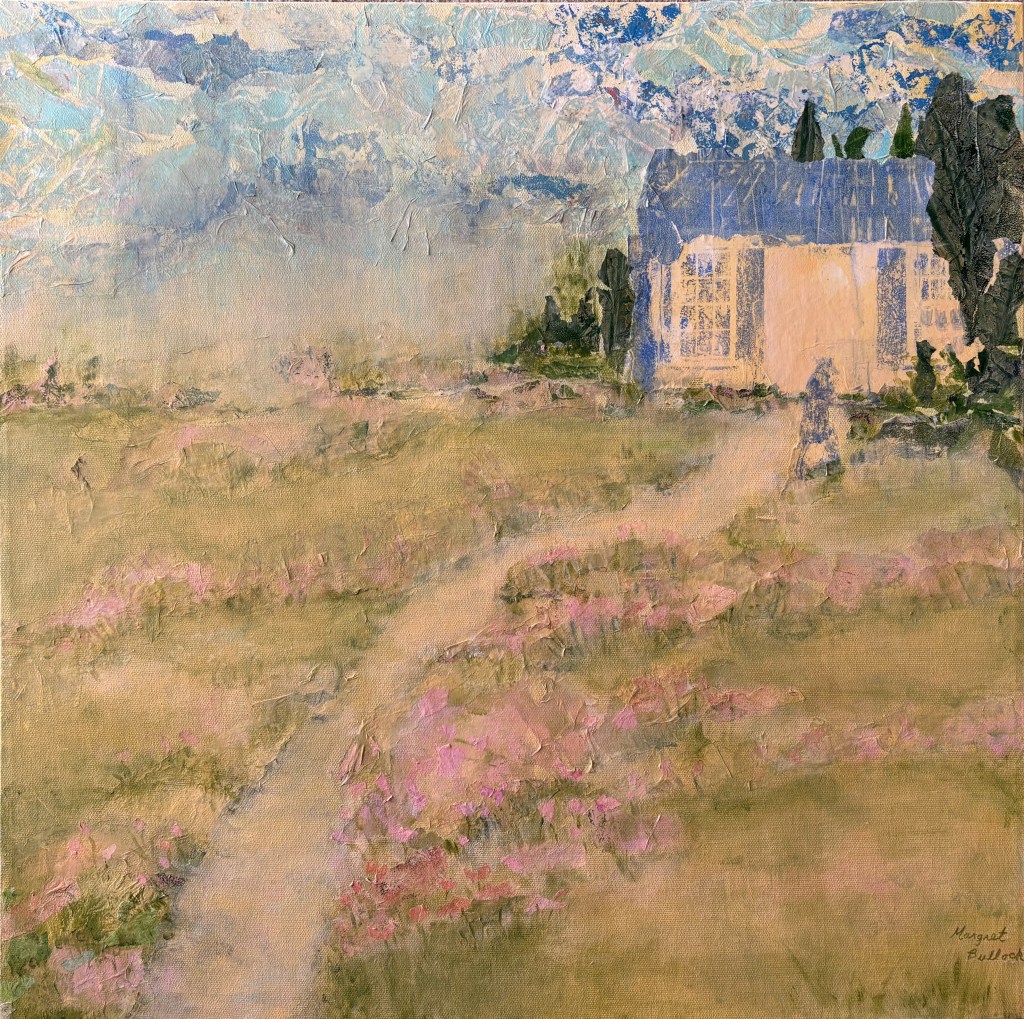
(Pictured: Lambeth Art Association artist Margret Bullock’s “Field of Dreams”, mixed media collage of an imaginary garden scene, 20 by 20 inches.)

Patricia Walker joined the LAA in 2025. She says, “I feel very lucky to be part of the Lambeth group.” When she moved back to southwestern Ontario in 1980, she enquired about joining, but the wait list at that time was years long, so she continued to work in isolation with not a whole lot of excitement about art. This, recalls Walker, resulted in a “period of non-productivity.”

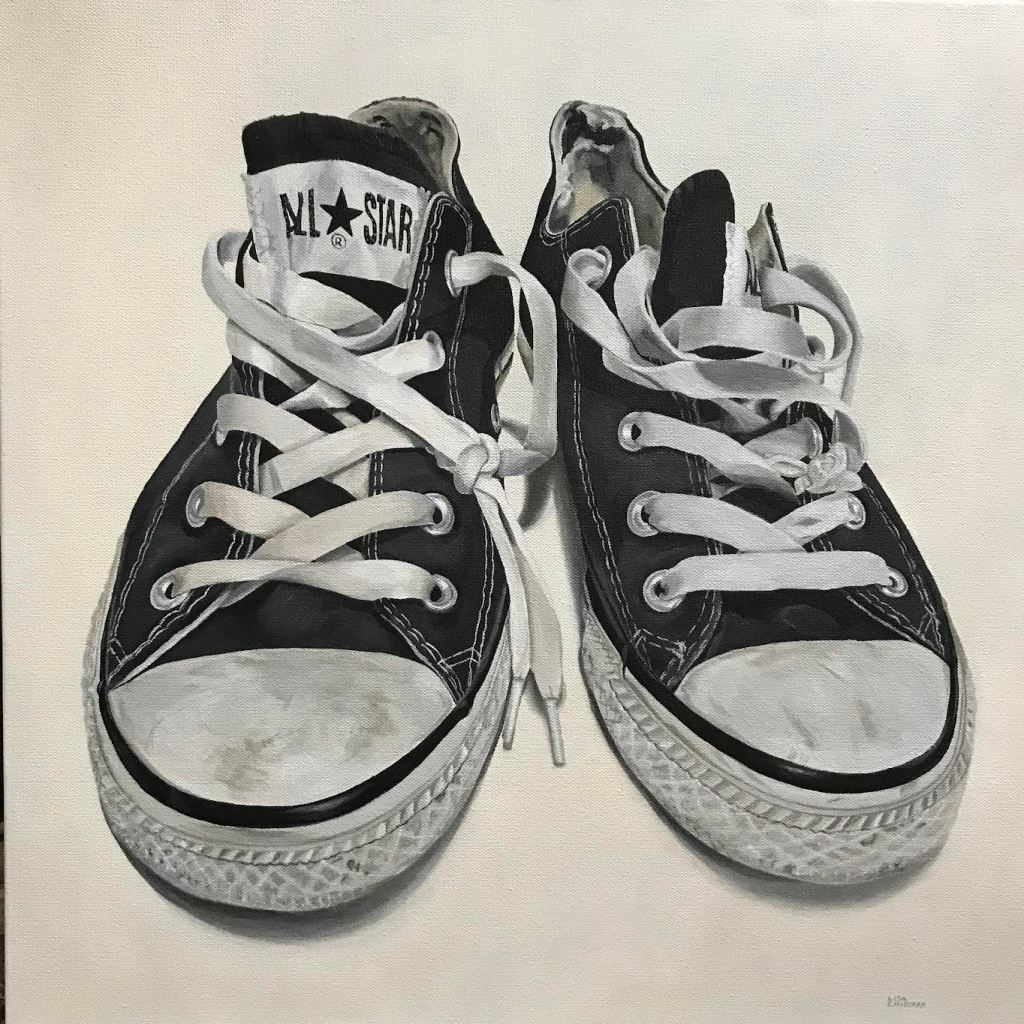
(Pictured: LAA artist Lisa Chiborak’s “Really Big Shoes”, acrylic, 20 by 20 inches.)

Walker says, “The group is friendly and willing to share their techniques, their journey and their frustrations with different mediums. It makes me want to keep creating.” In addition to the LAA, Walker belongs to the London Community Artists, the St. Thomas Art Guild, the Port Stanley Art Guild and the Creative Nomads.

For additional information, visit: https://www.lambethart.com/ or interact with the LAA on Facebook: https://www.facebook.com/lambethartassociation/

The London Community Artists (LCA) is the new kid on the block. It was formed by Wendy Jennings in 2018 in response to the lengthy wait lists to join other clubs.

Membership was initially limited to 50 members, but this was increased to 75 in 2023. Even with the expansion in membership, LCA maintains a wait list of approximately 100 hopefuls. New members are accepted in January to fill any vacancies that have come about throughout the year.

(Pictured: 09 London Community Artists’ Heather Peel, “Autumn Calm”, acrylic (mostly palette knife work), 11 by 14 inches.)

Members’ meetings feature speakers, and there are frequent “Paint Days” at Western Research Park, where members get together to paint and share some special times. The club also offers monthly art challenges in which members submit their best work in response to a specific topic. Entries are reviewed by their peers, and the first and second-place winners receive a gift card for art supplies.

In 2024, they began hosting workshops led by both internal and external experts.

The LCA has established long-term partnerships with Cherryhill Village Mall, Western Research Parks and the Children’s Hospital at London Health Sciences’ Victoria Campus. Members have art on display at each of these locations throughout the year. Their longest-running and most successful display is at the Cherryhill location, where member artists have sold over 140 pieces of art.

(Pictured: “Old Post Office (Cambridge)”, watercolour and ink, 16 by 20 inches, by LCA artist Bill Stephens.)

LCA hosts two major Art Shows each year: one in April and another in November. This year’s Spring Show is scheduled for April 16 to 19, 2026, at The Collider, located in the Western Research Park off Veterans’ Memorial Drive and Bradley Avenue.

Current president Bill Stephens joined in 2019. It is the only club he belongs to, and he has been involved in all the club’s activities.

Membership has served him well in his personal art journey. Stephens says, “I have learned so much from our talented members.”

For additional information, visit: https://londoncommunityartists.ca/

Written by Beth Stewart

Beth Stewart is a writer, educator, and visual artist. She has a B.A. and a B.Ed. from the University of Windsor and a Diploma in Art Therapy from Western University. Beth has worked as an Art Therapist with Canadian war veterans and as a Secondary School Teacher of art and English for the TVDSB. She retired in 2024.

Beth was the arts editor at Scene Magazine from 2004 to 2006. She founded Artscape Magazine in 2006 and served as its editor until 2008. In addition, Beth wrote on the arts for Lifestyle Magazine from 2006 to 2017 and served as the copy editor for The Beat (in print) from 2009 to 2013.

As a visual artist, Beth works mainly in dry media and favours coloured pencil. Over the past decade, Beth’s focus has been on wild and domestic birds. Beth is a member of the Coloured Pencil Society of America, the Gallery Painting Group, the Eclectic Collage Collective, the Lambeth Art Association, and a founding member of the Coloured Pencil Artists of Canada group.

Web: https://bethstewart.ca/

Facebook: https://www.facebook.com/profile.php?id=100009620916363

The Importance of Being Earnest: A Riot of Colour and Wit – If You Can Keep Up!

by Richard Young

Reviewed by Jo-Anne Bishop

There’s a reason Oscar Wilde’s The Importance of Being Earnest has endured for well over a century. Premiering on Valentine’s Day in 1895 at London’s St. James Theatre, the play is a razor-sharp satire of Victorian society, skewering everything from marriage and class to the absurdity of social expectations. Wilde’s signature style—fast-paced, highly stylized, and dripping with irony—remains both its greatest strength and, at times, its greatest challenge.

As quoted in the director’s note, “rarely has the stiletto of dissident humour been driven so smilingly between the ribs of bourgeois convention.”  This line from Neil Bartlett perfectly captures Wilde’s enduring bite.

Now playing at the Grand Theatre, this production, directed by Alistair Newton, leans boldly into theatricality, delivering a visually striking and energetically performed interpretation that feels surprisingly modern and relevant in 2026. Wilde’s themes of performative identity, social façades, and the tension between authenticity and expectation still resonate today, perhaps even more in an age of social masking, highly curated personas and digital selves.

That said, this is not a production you can passively absorb.

(Photo by Dahlia Katz.)

I found myself needing time to sit with the show afterwards. The rapid-fire dialogue and heightened language, true to Wilde, can be difficult to follow, especially if you’re not already familiar with the story. There were moments where I lost the thread entirely, only to piece things together in retrospect. For audiences new to the play, a bit of homework beforehand will go a long way. If you have a short attention span or struggle with dense, fast-paced English dialogue, this is one where preparation really matters.

Visually, the production makes a striking and very bold statement. Set designer Michelle Tracey creates three distinct worlds across the acts: a lush, all-green opening (down to the piano and cigarette case), a fully yellow second act, and a vivid red-and-yellow third. The only figure fully in red is the formidable Aunt, commanding attention in a room that mirrors her dominance. It’s an ambitious and cohesive design, though at times, its intensity borders on overwhelming.

(Photo by Dahlia Katz.)

The costumes, designed by Judith Bowden, are pitch-perfect: bright, bold, and beautifully in sync with the set’s colour story. One exception is Cecily, whose costume felt slightly muted by comparison, causing her to fade visually in moments where she might otherwise shine. At the same time, it perfectly separated her character from the others, showing the contrast between the city’s pomp and the country’s quiet reserve.

(Photo by Dahlia Katz.)

The dialect work, coached by Phyllis Cohen, is strong throughout, helping anchor the heightened language in both clarity and rhythm.

Performance-wise, the cast is superb across the board. Deena Aziz brings warmth and precision to Miss Prism, while James Daly’s Algernon Moncrieff is delightfully playful. Julien Galipeau grounds John Worthing with charm, and Kaylee Harwood delivers a sharp, engaging Gwendolen Fairfax. As Lady Bracknell, Claire Jullien commands the stage with authority and wit, while Ben Sanders capably fills multiple roles, including Reverend Canon Chasuble and Lane.

Standout performances for me came from Billy Lake as Lady Stella Clinton and the Merriman—whose drag performance drew some of the biggest laughs of the evening—and Mirabella Sundar Singh as Cecily Cardew, who brought a delightful presence and nuance to the role.

Ultimately, The Importance of Being Earnest isn’t going to be for everyone, and this production doesn’t try to soften its edges. It’s fast, it’s dense, and it demands your attention. But if you’re willing to meet it on its level, it offers a rewarding, visually dazzling, and often very funny experience. And while there may not be a distinct message or lesson to learn, it makes a bold statement.

Overall, this is a vibrant, well-directed production with exceptional performances, inventive design, and a distinctly modern pulse. Just be prepared to keep up.

IF YOU GO:

What: Oscar Wilde’s The Importance of Being Earnest, Directed by Alistair Newton

Where: The Grand Theatre, 471 Richmond St, London, Ontario

When: March 24th to April 12th, 2026.

Tickets: $25-97, available at the Box Office or online at The Importance of Being Earnest | The Grand Theatre

Reviewed by Jo-Anne Bishop

Background and Experience in the Arts

My background in the Arts started with an early love for music and dance. I attended my first concert at 10 years old (Helix at the Sarnia Arena in 1983!) and began tap and modern jazz dance lessons around the same time. My love for live theatre was built through school trips to the Stratford Festival to see plays like Romeo and Juliet, The Merchant of Venice, and Macbeth, and a trip to Toronto for The Phantom of the Opera, which quickly became my all-time favourite.

I dreamed of performing for many years, but being too self-conscious to audition in high school, I sat on the sidelines and instead reviewed music and theatre for our school newspaper. In 2013, I finally pushed my fears aside and was cast in my first play, Laughter on the 23rd Floor, as Carol Wyman, the only female writer on the Max Prince show. I have since performed in productions of Birth (Jillian, 2016), Hamish (Annette, 2023) and The Curious Incident of the Dog in the Nighttime (Mrs. Alexander, 2024).

Previous Reviewing Activities

SCITS, Sarnia, Ontario – High school newspaper reviewer for Music and the Arts

London Fringe Festival, London, Ontario, 2012-2015

Independent Reviewer and Blogger (Theatre in London and The Pollyanna Papers), 2015-2016?

Why am I jumping back into the fray now?

After performing for a few years, I’ve decided to take a break from the grind of auditioning, rehearsing and performing. While I love it immensely, it’s a lot of work. Performing has given me a whole new perspective and appreciation of what goes into a production and the ability to look at reviewing with a fresh set of eyes.

Thoughts about the London arts and culture scene, especially local theatre

Hoo wee! London has such a wealth of talent, from youth to adults. Every time I see a play, I am amazed at how talented our actors, directors, producers, set/prop/costume/light/, and sound designers are. I don’t think causal observers realize just how much goes into making a production from the audition to the curtain call. It is a huge undertaking, and to think our theatres produce such world-class productions on some very tight budgets is astounding, especially at the community theatre level, where volunteers do everything.

Sadly, since COVID, I have witnessed a huge decline in attendance at performances, and it breaks my heart. I have also noticed a sad lack of reviews lately, which I find are necessary to give people an idea of what to expect and a reason to go to the theatre.

So, before I can put my feet on the stage again, I want to help put bodies in the seats. We need to reignite a love for theatre and the arts in this city.

A Killer Performance Anchors a Sharp “Prescription: Murder”

by Richard Young

Reviewed by Jo-Anne Bishop

(Pictured: Cast of Prescription: Murder, Tameka Brown, Eve Cohen, Andre Cormier, David Pasquino, Sam Didi, and Makayla Ashenden. Photo Credit: Ross Davidson.)

Murder is rarely this polished – or this fun to watch.

On the Auburn Stage at the Grand Theatre in London, Ontario, Prescription: Murder wastes no time pulling its audience into a sleek, slow-burning game of cat and mouse. Running March 19–29 and directed by Stephen Mitchell, this black box production leans into intimacy and largely thrives because of it.

Originally written by William Link and Richard Levinson, the play serves as the foundation for the iconic television detective Columbo. The story centres on a brilliant and calculating psychiatrist who believes he has devised the perfect crime, only to find himself gradually entangled in a battle of wits with the seemingly unassuming Lieutenant Columbo. What unfolds is less a traditional whodunit and more a tense psychological chess match, where the outcome feels inevitable, but the journey is where all the intrigue lies.

(Pictured: David Pasquino as Lieutenant Columbo. Photo Credit: Ross Davdson.)

The ensemble is tight and reliable across the board. Makayla Ashenden brings a grounded vulnerability to Susan Hudson, while Tameka Brown and Eve Cohen offer strong, steady support as Miss Petrie and Claire Flemming. Sam Didi moves seamlessly through dual roles, and David Pasquino’s Lieutenant Columbo is understated, patient, and quietly probing—exactly what the role demands.

But let’s be honest: this is André Cormier’s show.

(Pictured: Andre Cormier as Dr. Roy Flemming. Photo Credit: Ross Davidson.)

As Dr. Roy Flemming, Cormier delivers a performance that is sharp, controlled, and magnetic. He walks a perfect line between charm and menace, with only the slightest of line slips in an otherwise near-flawless turn. What stands out most is his precision. Every look and every pause feels intentional. His seething, barely contained irritation with Columbo simmers just beneath the surface, and it’s riveting to watch. You don’t just see the character unravel; you feel it.

The staging makes smart use of the black box space, carving out distinct environments—the doctor’s office, reception area, apartment, and Columbo’s workspace—without overcomplicating things. A few of the scene changes occasionally drag a beat too long, but they’re supported by effective lighting and sound that keep the tension alive.

(Pictured: Tameka Brown as Miss Petrie, Andre Cormier as Dr. Roy Flemming, and Eve Cohen as Claire Flemming. Photo Credit: Ross Davdson.)

Costuming and attention to detail further ground the production in authenticity. Each character is clearly defined through wardrobe, but it’s Lieutenant Columbo who benefits most from these thoughtful choices. David Pasquino appears perfectly dishevelled with mussed hair, a slightly rumpled coat, and even an untied shoe that subtly reinforces the character’s offbeat, absent-minded persona. It’s a small but effective touch, and one that adds texture and believability without feeling trite or overstated.

(Pictured: Andre Cormier as Dr. Roy Flemming and David Pasquino as Lt. Columbo. Photo Credit: Ross Davdson.)

There are a few minor cracks in the illusion. Some set pieces wobble when doors are slammed, which briefly pulls focus. But these moments are small and quickly forgotten. Overall, this Prescription: Murder is lean, engaging, and anchored by a standout central performance. It’s a confident piece of theatre that knows exactly what it’s doing—and for fans of classic detective drama, it absolutely delivers.

IF YOU GO:

What: DJP Productions presents Prescription: Murder by William Link and Richard Levinson

When: March 19-29, 2026

Where: Auburn Stage, Grand Theatre, 471 Richmond St, London Ontario.

Tickets: $31.70-$36.70  Prescription: Murder | The Grand Theatre

Reviewed by Jo-Anne Bishop.

Background and Experience in the Arts

My background in the Arts started with an early love for music and dance. I attended my first concert at 10 years old (Helix at the Sarnia Arena in 1983!) and began tap and modern jazz dance lessons around the same time. My love for live theatre was built through school trips to the Stratford Festival to see plays like Romeo and Juliet, The Merchant of Venice, and Macbeth, and a trip to Toronto for The Phantom of the Opera, which quickly became my all-time favourite.

I dreamed of performing for many years, but being too self-conscious to audition in high school, I sat on the sidelines and instead reviewed music and theatre for our school newspaper. In 2013, I finally pushed my fears aside and was cast in my first play, Laughter on the 23rd Floor, as Carol Wyman, the only female writer on the Max Prince show. I have since performed in productions of Birth (Jillian, 2016), Hamish (Annette, 2023) and The Curious Incident of the Dog in the Nighttime (Mrs. Alexander, 2024).

Previous Reviewing Activities

SCITS, Sarnia, Ontario – High school newspaper reviewer for Music and the Arts

London Fringe Festival, London, Ontario, 2012-2015

Independent Reviewer and Blogger (Theatre in London and The Pollyanna Papers), 2015-2016?

Why am I jumping back into the fray now?

After performing for a few years, I’ve decided to take a break from the grind of auditioning, rehearsing and performing. While I love it immensely, it’s a lot of work. Performing has given me a whole new perspective and appreciation of what goes into a production and the ability to look at reviewing with a fresh set of eyes.

Thoughts about the London arts and culture scene, especially local theatre

Hoo wee! London has such a wealth of talent, from youth to adults. Every time I see a play, I am amazed at how talented our actors, directors, producers, set/prop/costume/light/sound designers are. I don’t think causal observers realize just how much goes into making a production from the audition to the curtain call. It is a huge undertaking, and to think our theatres produce such world-class productions on some very tight budgets is astounding, especially at the community theatre level, where volunteers do everything.

Sadly, since COVID, I have witnessed a huge decline in attendance at performances, and it breaks my heart. I have also noticed a sad lack of reviews lately, which I find are necessary to give people an idea of what to expect and a reason to go to the theatre.

So, before I can put my feet on the stage again, I want to help put bodies in the seats. We need to reignite a love for theatre and the arts in this city.