No Mr. Trudeau, I don’t want Statistics Canada accessing my personal banking information

News that Statistics Canada is asking the country’s nine largest banks for the transaction data of 500,000 randomly chosen Canadians, including everything from bill payments to cash withdrawals from ATMs to credit card payments and even account balances, got buried by events transpiring elsewhere in the world.

The government has said it has the legal authority to do so — even without informing Canadians or getting their consent — in order to build a personal information data bank to analyze things like consumer trends and spending habits.

Conservative House Leader Candice Bergen grilled Prime Minister Justin Trudeau about the request during question period Monday following the Global News report that revealed it. [Note: I am not a Conservative. IMHO, this is a non-partisan issue.]

Surprisingly, Trudeau defended the request, claiming that “High quality and timely data are critical to ensuring that government programs remain relevant and effective for Canadians,” adding that his government would ensure that all personal information would be protected and be used for statistical purposes only.

Say what?

In these days of almost daily Internet privacy breaches, who in their right mind – let alone the country’s PM – would willingly offer up their banking information to a third-party?

All that’s missing here is a robo-call  asking Canadians for their Credit Card and Access Card information.

Statistics Canada has said that once the data is compiled by the agency it will be made anonymous in order to remove personal identifiers saying it hopes to have the initiative up and running by January 2019.

Despite Trudeau’s reassurance, readers may remember that Statistics Canada lost nearly 600 sensitive files during the 2016 census process after confidential documents were left on a subway and hundreds were lost after an employee’s car was stolen.

Not exactly comforting news.

Surely, Canadians will vocalize their opposition to this unacceptable intrusion into their financial transactions.


A Star Is Born is a pleasant surprise

0001001524

Because I’m old enough to remember the embarrassingly bad 1976 Barbra Streisand/Kris Kristofferson version of A Star Is Born, I was in no particular hurry to see the new one. Thankfully, I was pleasantly surprised when I went to see it on Saturday with Val Cavalini.

Lady Gaga (Stefani Joanne Angelina Germanotta) and Bradley Cooper have great screen chemistry as the two star-crossed lovers and the soundtrack is great.

Sure, it’s a schlocky cliched love story, but in these days of hate-filled world leaders, acts of terrorism and Fascist creep, it’s a great way to spend a couple of hours in a darkened theatre.

Oh, by the way, bring some Kleenex. It’s a real tearjerker.

Here’s the tune that’s likely to be an Oscar contender next Spring.

October 22 can’t come soon enough for me

vote

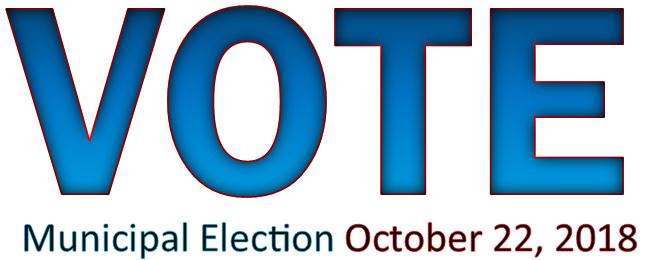
I don’t know about you, but I can’t wait for October 22 to come so this divisive municipal election campaign can finally be over.

I’m tired of the acronym BRT and all it represents.

I’m tired of BRT sucking up all the time, while other issues like poverty and homelessness take a backseat.

I’m tired of hearing the adjective “transformational.”

I’m tired of hearing some Mayoral candidates arguing over who has the most impressive business background and employment history, as if these were major prerequisites for the position.

I’m tired of hearing Paul Cheng’s godawful radio spot “Cheng for Change.”

I tired of hearing about election sign vandalism, phoney websites targeting female candidates, mysterious PR firms and election slates, and seemingly endless candidates’ meetings.

I’m tired of reading articles about how Ranked Balloting works and how it might impact the results of the October 22 election results.

But, more than anything else, I’m alarmed about how this election campaign has divided Londoners on the basis of class and income, age, place of residence and perceptions of the city past and present.

There may have been more acrimonious municipal election campaigns in London’s political history, but none that I can remember during my years voting  (1972 to present).

My major fear is that this campaign has turned off voters and may result in a poor turnout at the polls on October 22. This could be the worst outcome given the important issues at hand.

So, I can’t wait to cast my ranked ballot on October 22.

I hope you feel the same.


Reflections on cannabis legalization

Marijuana leaves (Shutterstock)

I was listening to a cannabis entrepreneur on the radio talking about his company’s THC-infused non-alcoholic products and their degree of intoxication the other day, when it suddenly hit me what a paradigm shift (I hate that term, but it fits here) Canadian society has experienced in regard to marijuana harvesting, sales and distribution, and consumption.

Almost overnight, the cannabis sector has become a legal multi-million dollar industry set to kick into operation throughout the land on Wednesday, October 17. Some provinces will have retail outlets – private or government-run – open for business, while others will sell cannabis online.

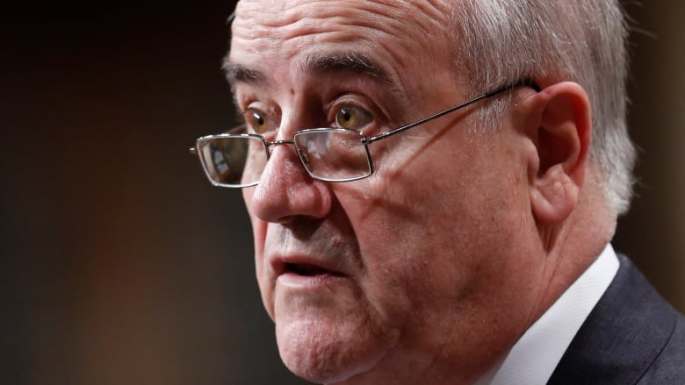
What’s more overwhelming is how many former “straights” like former Toronto and London police chief and former federal Cabinet minister, Julian Fantino, who have taken entrepreneurial leadership roles in the sector. This is the same guy who once compared legalizing weed to legalizing murder. WTF? I guess money trumps everything.

canada-politics
Fantino, a longtime opponent of marijuana legalization, told the Toronto Sun in 2004 that legalization would not cut down on crime, adding: “I guess we can legalize murder too and then we won’t have a murder case. We can’t go that way.”

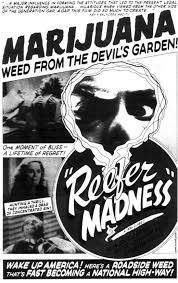
As someone who came of age in the 1960s when pot was very much a demonized illegal substance –  see movies like The Devil’s Weed and Reefer Madness – and usually only consumed by so-called fringe groups like hippies, artists and musicians (famous and otherwise), this change in attitudes in not only welcome but mind-boggling and a reminder of how old I am.

43753634_10155561548766121_9180209969172054016_n
The movie Reefer Madness, released in the 1930s, continued to influence attitudes to cannabis well into the 1950s and 1960s.

Indeed, I remember two infamous London narcs – Dave Tennant, who is now a big wheel in real estate development, and Brian Garroway – chasing teenagers around town and busting them for nickel and dime bags. Those were the days!

To be quite honest, I never thought I would live to see the day when it would be legalized.

Be here we are.

Let the great social experiment begin!

[To see how far attitudes have changed, check out this Link for the full length movie Reefer Madness released in 1936 https://www.youtube.com/watch?v=zhQlcMHhF3w%5D

The Wife is enthralling drama

xwcpsl8pfbwwi4kt997d

Just saw The Wife at the Hyland Cinema.

I didn’t know what to expect going in and was completely enthralled by what I saw on the screen.

The film is about an affluent older couple, celebrated author Joe Castleman and his supportive wife Joan, who seem to have it all . We learn how they met and fell in love through a series of flashbacks.

However, Joan questions her life choices as she travels to Stockholm with her flirtatious husband, where he is slated to receive the Nobel Prize for Literature.

While there it becomes obvious that they have a carefully guarded secret about their working relationship – which I will not reveal here in deference to those people who plan on seeing it.

The Wife has stellar cast led by veteran actress Glenn Close who gives an Oscar worthy performance. Other cast members include Christian Slater, Elizabeth McGovern, and Max Irons.

See it before it’s gone.

Directed by Björn Runge. Screenplay by Jane Anderson based on the novel The Wife by Meg Wolitzer.