
Where Are All The BRT Mayoralty Candidates?

5747b0e844e04.image

Now that Matt Brown has announced that he will not be running for Mayor this fall, BRT has lost one of its most vocal champions.

While others on council like Jesse Helmer have trumpeted the benefits of BRT in the face of growing opposition to the plan, none has publicly supported it quite as adamantly as Mayor Brown.

This brings me to a simple question: Where are all of the potential BRT candidates for Mayor?

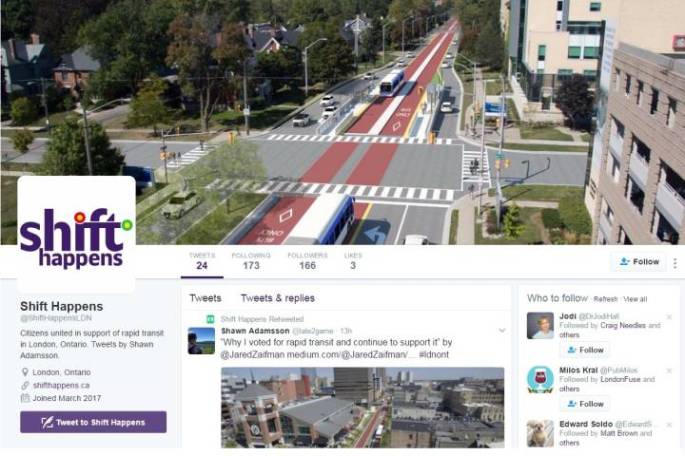
Certainly, there can’t be any shortage of them. One only needs to examine their website http://shifthappens.ca/ to see the many names of would-be mayors. And a few hours spent on social media platforms like Facebook and Twitter will smoke them out should anyone have the audacity to question the merits of BRT.

You know, social media bullies like Shawn Adamsson and Gary Brown who go for the jugular of anyone opposed to BRT, drowning them in a sea of facts and figures, statistics and case studies. And if that fails, they don’t hesitate to guide their attacks into ad hominem territory.

shift-happens-twitter-feed1

Don’t believe me? Go on Facebook or Twitter and post an anti-BRT statement and wait for it. Usually within five to ten minutes, one of them, usually Adamsson, will pounce like a well trained attack dog.

Indeed, their online attacks have probably turned off many Londoners and steered them away from BRT in disgust.

I would assume recent mayoralty candidate, Tanya Park, will pick up the torch of BRT, as she has spoken in support of it in the past.

But my challenge is to Adamsson and his Shift Happens pals: Put your money where your mouths are or back off.

And don’t insult people’s intelligence by hiding behind the argument that you’re not politically associated with the issue, as I have seen you do many times online.

In other words, put up, or shut up.

We’re waiting….

Remembering The Comic Opera from As The Years Go By

The Comic Opera 1969, Yates, McCann, Young, Eade and Moorhouse 004

(L to R – John Moorhouse (bass), Steve McCann (keyboards), Cherril Yates (vocals), Rick Young (drums) and Gary Eade (guitar).

Way back in the mid-1980s, I was interviewed by two London Free Press reporters, Randy Ray and Mark Kearney, about The Comic Opera, the band of which I was a member in the late 1960s and early 1970s.

The interview was for a column the two prepared for the paper called “Where Are They Now?” in which they profiled rock bands and musicians who played in and around Southwestern Ontario.

In addition to my band, many other local bands and musicians like Thundermug, The Bluesmen Revue, Graham Lear, The Raes featuring Cherrill Rae Yates, and Grant Smith were included in the series.

In 2017, Ray and Kearney compiled all of these articles into a compilation called As The Years Go By, now available for sale in the JRLMA Hall of Fame.

What follows is the updated article on The Comic Opera that appears in the book.

_______________________________________________________________________________________________

The Comic Opera Rock Show

Nearly five decades have passed since The Comic Opera Rock Show came together in St.Thomas, Ontario.

As fate would have it, the group would not go on to stardom, and Rick Young would not win fame and fortune as a big-time rock celebrity.

But if the band could have reunited at some point for an evening in one of the Ontario dance halls where it used to play, its members would have found out that things worked out rather nicely for each other.

The Comic Opera Rock Show regularly shuffled personnel — 24 members passed through — but an early line up was founder Steve McCann and bassist John Moorhouse,both of London, Ontario; singer Cherrill Yates; guitarist Paul Hackman and drummer Gary Burditt, all from St. Thomas. Young and drummer Gary Eade, both also of London, later replaced Hackman and Burditt, to form the version of the band that was together longest.

“They were great days,” recalls McCann. “It was a treat to know you could work every weekend, play valid jobs and get good exposure,” McCann said in a mid-’80s interview while he was the owner of Yer Man’s Irish Pub on London’s Dundas Street.

Comic Opera is probably best remembered as a concert band in its early days and later, a peppy dance group with heavy emphasis on tunes by Janis Joplin, Bonnie and Delaney and Friends and Sly and The Family Stone, that capitalized on Yates’ strong voice.

The band formed in 1969 and for about 2-1/2 years, played teen clubs such as Lambeth Teen Town, The Met Set in Metropolitan United Church in downtown London and later Wonderland Gardens, the Spoke and Rim Pub at the University of Western Ontario and dances in Grand Bend, Bayfield, Port Dover and Hamilton, among other places.

It practised on weekends in the service bays at a car dealership operated by McCann’s father on Talbot Street in St. Thomas. A Lambeth barn was also a favourite hangout.

In its first year, the group was a regular Saturday night act at Wonderland Gardens, usually opening for out-of-town bands such as Mashmakhan and Mitch Ryder and The Detroit Wheels.

When Young joined, he added management skills that won the band regular gigs as far away as Windsor and Toronto. Members were still in school but sometimes worked six nights a week.

“In those days many groups were doing acid rock music. It wasn’t really suitable for dancing,” recalled Young. “We were always booked because we could be danced to.”

Comic Opera was the “unofficial” house band at The Spoke and Rim before it moved to a new location.

Yates, who later became Cherrill Cucanato, said her experience with the group convinced her to go full time in music. She remembered some crazy times and some aged equipment.

“Our van would break down at 3 a.m. in the middle of nowhere and all of us would hitch-hike 35 miles to a gas station.”

Another time, she said, McCann was in the middle of a “smoking solo” when a leg snapped on his organ. A roadie had to support the instrument until the song was finished.

“But it was my grounding in music. I learned how to love it to stay with it. If you don’t, you’ll never survive. It’s tough,” she said.

Moorhouse said Comic Opera had a large local following and was convinced that the group had a big future.

“I remember seeing bumper stickers with our name on cars in the UWO parking lot. We took that as a pretty big compliment. I thought we were going to make it pretty big.”

But it wasn’t to be. In early 1971, the group recorded three original “demo” songs, Black Cat, Trans Canada Highway and If You’ll Take My Hand, in a bid to win a record deal.

The songs received limited airplay in London but never made the charts and were never pressed as records, said Young. Lack of commercial success, combined with artistic differences among members, led to Comic Opera’s demise.

“It was a major disappointment,” says McCann, also remembering how band members’ musical tastes began to take different directions. “I wanted to play stuff by Yes and Emerson, Lake and Palmer, very technical music. It came down to a choice between staying a good weekend party band or making a career out of it.”

Young and Eade left the group and it folded shortly after. Rae probably had the best success after Comic Opera, electing to move back to her native England in the early ‘70s, where she met Welsh singer Robbie Rae. The couple returned to St. Thomas, married in 1974, formed The Raes, recorded a handful of hit records and had their own TV show in the late ‘70s and early ‘80s. She later split with Rae. and remarried. In 2017, she was living in Florida.

Hackman played guitar with Kitchener rock band Helix; Young taught at Montcalm Secondary School in London; Moorhouse was a supervisor at Kellogg Salada Canada Inc. in London; Eade was a London methane gas consultant.

Moorhouse was featured in a 2009 article in the Brantford Expositor that focused on his work of 15 years as the featured entertainer at the Olde School Restaurant outside of Brantford. “My job is to provide a pleasant atmosphere for dining and entertainment afterwards,” he told writer Tim Philp

(From As The Years Go By by Randy Ray and Mark Kearney, 2017)

Celebrating Lorne Whitby’s 70th Birthday with music and friends

Stage7

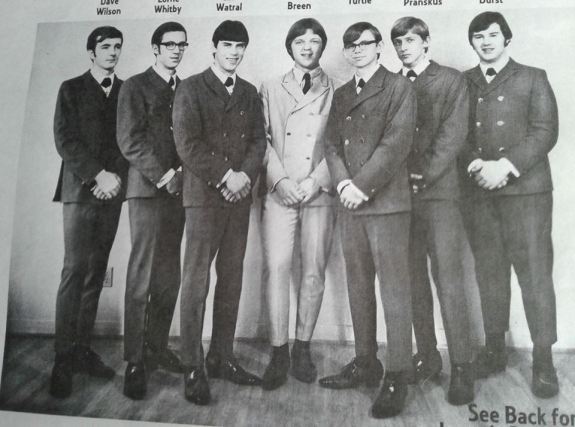
Stage Seven 1968 (Dave Wilson, Lorne Whitby, Carl Watral, Pat Breen, Dave Stewart, Ed Pranskus, Bill Durst)

On Saturday, March 31, close to 100 family and friends gathered in a local pub to celebrate the 70th Birthday of Lorne Whitby, a long-time London musician. Some came from thousands of miles away to pay homage to their friend and fellow band mate.

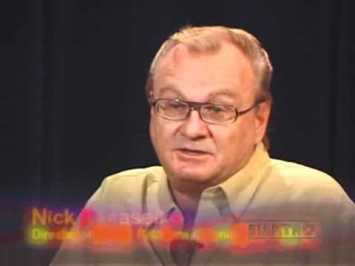
NickPIn attendance was a virtual collection of anybody who was/is anybody in the London music scene over the past 50 years or so, including impresario Nick Panaseiko, Scene Magazine music editor John Sharpe and his brothers Paul and Fred, former Bluesman Review bassist Jim Chapman, former Stage Seven horn player Carl Watral and bassist Dave “Turtle” Stewart, former Techniques members Ken Thorne, George Attrill, and Bob Pugh, and many others.
Also on hand were friends and long-time fans of the local music scene like Wendy Kaelin, Bruce Monck, Jon Federation and many others.EdPranskusFiftyShades

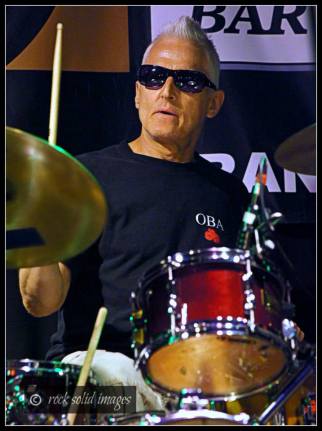
Entertainment was provided by The David Priest Quartet (David Priest keyboards, Sandy McKay drums, Larry Ernewin bass and John Culjak guitar) and a blues trio consisting of Ed Pranskus on drums, Larry Benoit VandeMaele on guitar, and Jack Coveney on bass.

On hand were Lorne’s sons from Alberta and his mother Betty, a stalwart in the London music scene.

Old road stories and memories of gigs, former bands, and music venues, some of them now long gone, were shared and a good time was had by all.

Why I Love You, Tonya Harding

29356401_10155141004621121_3736068534801243488_n

I must admit I was in no rush to catch I, Tonya when it first appeared in first-run theatres. Figure skating is not exactly my cup of tea, although I admire the beauty and skill of the sport. I have also attended Stars on Ice with my partner Val Cavalini, but more to appease her for my dragging her to see bands that she really has no interest in hearing

But, five minutes into the movie I knew that this was going to be an emotional and enlightening experience for me.

My knowledge of the 5’1″ skating dynamo was basically the same as everyone else who witnessed her meteoric rise and fall in the 1990s.

In short, she was gifted and very adept at the sport. She was the first American female figure skater to successfully perform the triple axel in a short program in 1991, a feat she never was able to accomplish again in her short career.

I also knew that she didn’t fit the mold of most female figure skaters. Unlike her “All American, Apple Pie” rival, Nancy Kerrigan, Harding was a “kid from the wrong side of the tracks” who smoked, swore like a sailor and hung out with lowlifes (who would have a negative influence on her career). All making her much different than her more privileged competitors, the little princesses who were all smiles and sequins.

And, of course, there was “The Incident,” as it is referred to in the movie.

A quick review of the incident: On January 6, 1994, Harding’s main team competitor Nancy Kerrigan was attacked after a practice session at the  1994 US Figure Skating Championships in Detroit by an assailant, later identified as Shane Stant. Harding’s ex-husband, Jeff Gillooly, and her self-appointed bodyguard, Shawn Eckhardt, hired Stant to break Kerrigan’s right leg so that she would be unable to compete at the 1994 Winter Olympics in Lillehammer.

Questions about Harding’s complicity in the attack created a media frenzy and scandal eventually leading to a court case which banned her for life from the American Figure Skating Association, bringing her career to a screeching halt.

Both in real life and the movie (as played convincingly well by Margot Robie), Harding insisted she knew nothing about the attack. Nevertheless, as Harding the movie character says after her banishment and the scandal “I became a punch-line.”

The opening credits proclaim that the movie is “Based on irony-free, wildly contradictory, totally true interviews with Tonya Harding and Jeff Gillooly.” From beginning to end I, Tonya allows its key characters to speak directly to the audience, through faux interviews that reproduce the boxy frames of TV reportage, and through fourth-wall breaks during the action.

Margot Robie is fantastic as the outsider red-neck Harding and it’s easy to understand why she received an Oscar nod for her performance. She is Tonya Harding in this movie, and it’s only when you see photographs of her and the real Harding that you notice how dissimilar the two really are.

Allison Janney as Tonya’s chain-smoking mother, LaVona, is equally as convincing. And she scores some of the best lines in the movie. “Show me a family that doesn’t have ups and downs!” she says after an abusive episode beween her and daughter. It’s easy to understand why she won an Oscar for her role.

The other supporting actors are all similarly convincing in their roles. Jeff Gillooy (as played by Sebastian Stan), Harding’s abusive husband, and his bumbling sidekicks provide comic relief, and it comes as no surprise to the audience why their scheme unfolded and they were apprehended quickly.

To be sure, the film captures the gritty realism of Harding’s “white trash” redneck upbringing and demeanour better than any film in my memory. Abusive parents, heavy drinking, premarital sex, excessive profanity (F-Bombs fly throughout the movie as does the four letter word for a woman’s vagina), and a general sense of despair are the hallmarks of underclass life. Today, Harding, her mother, and her cohorts would likely be Trump supporters wearing “Make America Great” ball-caps.

And here’s where my emotional attachment to the film comes in.

Like Harding, I was a working-class kid born on the wrong sides of the tracks, raised on Mother’s Allowance by a single mother who was both negligent and alcoholic. My absentee father, also an alcoholic and self-proclaimed con man, drifted in and out of my life, wreaking havoc and chaos each time he reappeared. The word “Fuck” was used as a noun, verb, adjective and adverb in our dysfunctional home. And like Harding, my self-esteem and self-image suffered as a consequence. As an escape, I turned to intellectual pursuits and learned how to play the drums after seeing The Beatles on Ed Sullivan in 1964. From that point on, all I wanted to be was a rock star.

Eschewing school (I once had a report card so bad, the Principal recommended that I immediately transfer to the local vocational school where I could learn a trade and become a contributor to society) for my Rock ‘n’ Roll career, I stumbled through most of my adolescence, choosing to live on my own at age 17.

After playing in a string of London rock bands, some very good and others not so much so, I applied to and was accepted by the University of Western Ontario as a Mature Student in 1975. Earning degrees in History & Politics and Education, I was on the Dean’s Honour each year of my attendance. Upon graduation, I was lucky enough to catch on with the London Board of Education (to later become the TVDSB), where I spent the next thirty years teaching high school History and coaching Football and Rugby.

Obviously, my childhood and adolescent experiences mirror to a certain extent those of Harding. Always consciously aware of my social class and unique upbringing, I usually felt like an outsider in most social situations, and run-ins with established authority figures were frequent (something that continued with administrators during my teaching career).

And like Harding, I grew up with a chip on my shoulder the size of a two-by-four. For me, words were my weapon of choice, and I developed a sharp tongue and wit, puncturing as many bourgeois balloons as possible along the way.

As a result, throughout most of the movie, I had my fists clenched in anger of how Harding was treated by her so-called “betters” and authority figures. At one point, I broke into tears when Harding confronts a judge about her marks and he politely tells her that she doesn’t fit the model of a figure skater suggesting to her that she find another sport. It was all I could do to prevent myself from shouting “Punch him in the fucking chops” at the screen.

To sum up, while for most people, I, Tonya may be an extremely well done depiction of a recent event in sports and cultural history, for some of us, it’s like seeing our lives portrayed on the silver screen.

And it is for that reason, I have to shout: I Love You Tonya Harding!