Why Have I Revived The Beat Magazine? It’s a labour of love and more.

by Richard Young, Publisher & Content Manager, The Beat Magazine 2025.
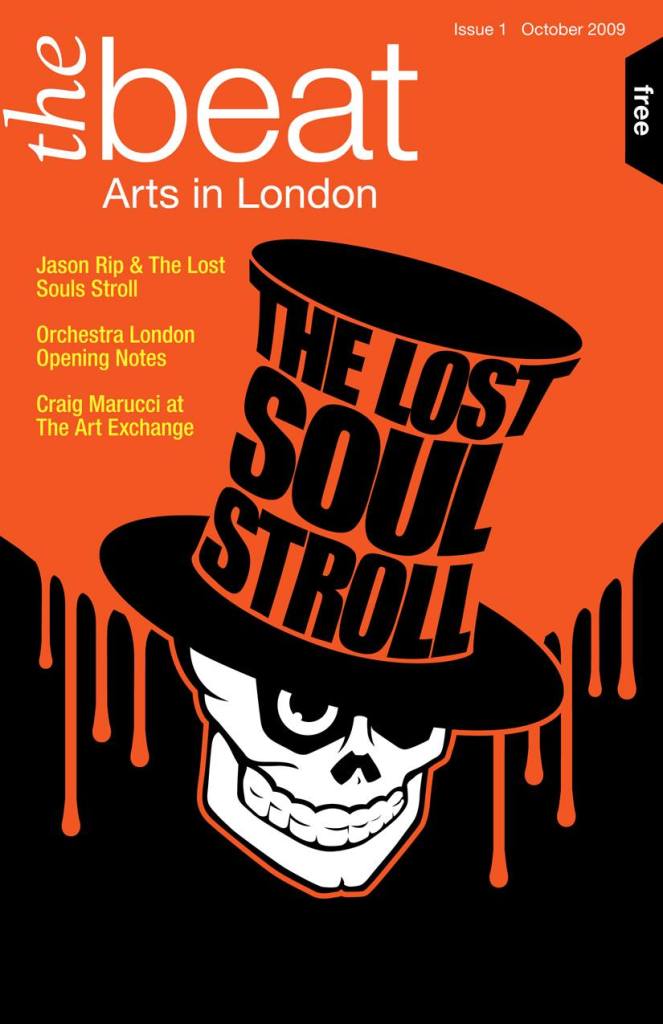
(Pictured: The Beat Arts In London, Issue 1, October 2009. Cover Art by Lionel Morise)

After a nine-year hiatus, I recently revived The Beat Magazine, an independent arts magazine I founded and published from 2009 to 2013, as The Beat Magazine 2025 website.

Since then, several of my peers and contemporaries have asked me one simple question: Why?

It’s a question I have asked myself many times over the last few weeks.

First and foremost, my reason for doing so is my humble attempt to make up for the lack of local arts and culture coverage in the mainstream media over the last several years. Frankly, I think this is criminal in a city the size of London. London and area creatives deserve better.

As one of our volunteer writers, Dawn Lyons, sums it up:

“London’s arts scene is alive with talent, creativity, and passion. It’s full of amazing artists across disciplines who continue to create, perform, and inspire, often without the recognition they truly deserve. I see The Beat Magazine 2025 as a way to showcase that energy and help connect people in the community with the incredible work happening around them.”

Much like the former print publication, the website provides timely, informed local arts news and commentary, and previews and reviews of local arts events. It also includes profiles of the area’s creatives and arts and culture venues. It is ad-free, and subscriptions are free. 
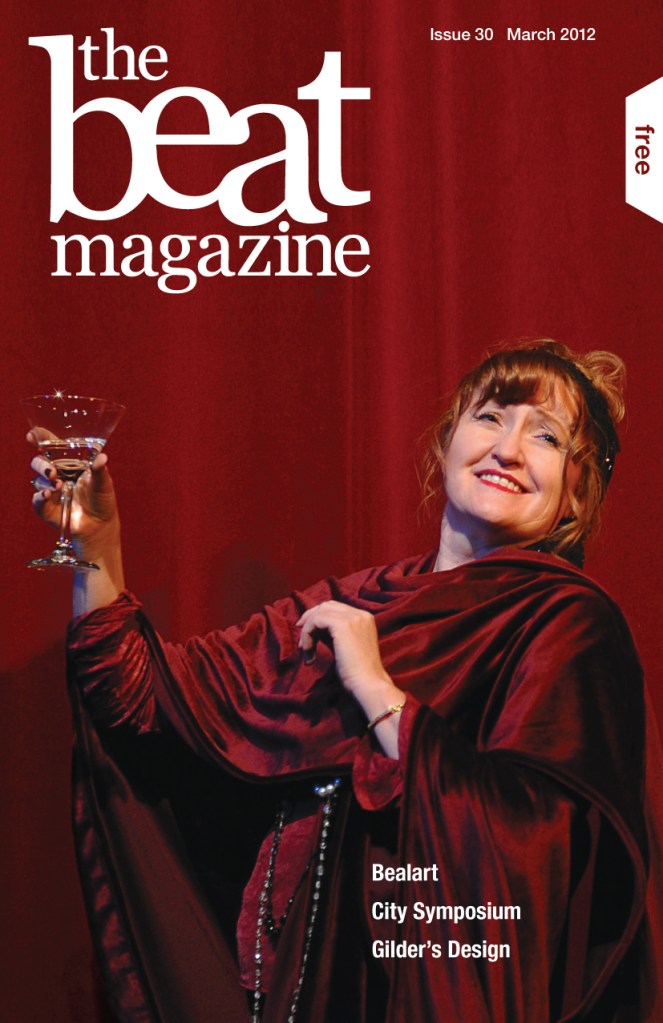
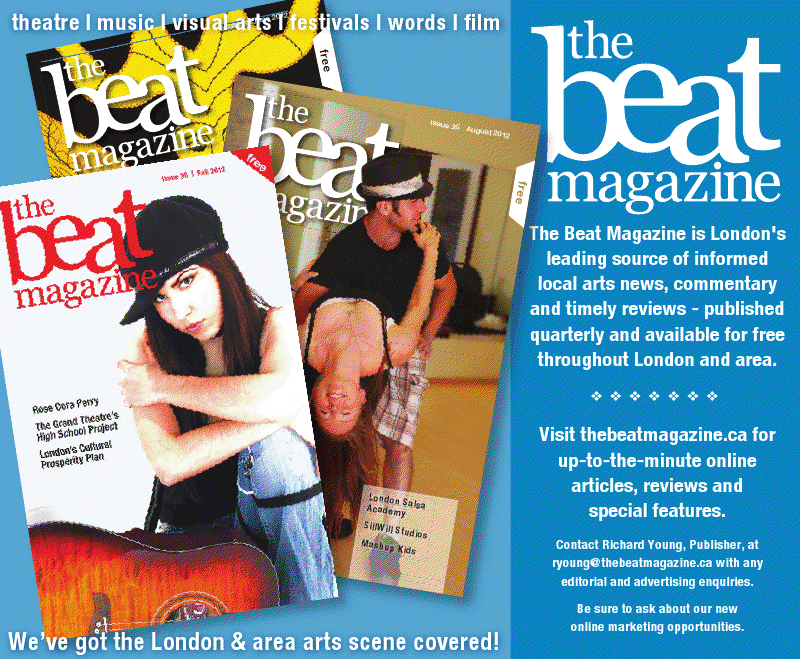
(Pictured: The Beat Magazine, Issue 30, March 2012. We featured Ceris Thomas on the cover. Ceris was appearing in The Drowsy Chaperone, then playing at the Palace Theatre.)

Second, simply because I want to.

Since the print magazine folded in the summer of 2013, I have kept myself busy doing many things.

I wrote freelance for a variety of local print publications, including Lifestyle Magazine, Business London, London, Inc., Professionally Speaking (Ontario College of Teachers), Scene Magazine, and the Villager Group of community magazines.
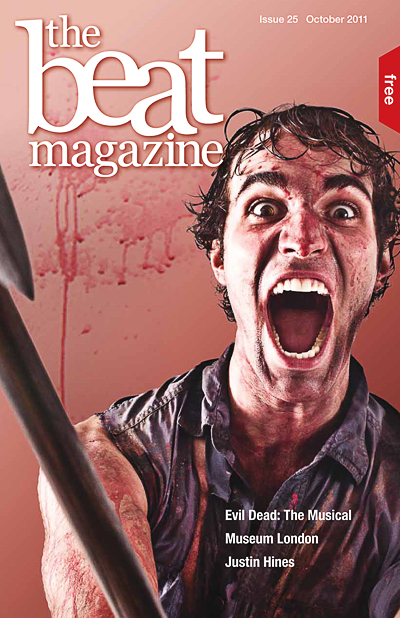
(Pictured: The Beat Magazine, Issue 25, October 2011. This cover featuring a cast member from Evil Dead: The Musical proved to be one of our most popular ones. We had difficulty keeping our stands stocked!)

I worked part-time/casually at a well-respected London Advertising & Marketing agency, writing copy about heavy industrial machinery. Talk about a learning curve! I thank owners Robert Adeland and Mina Thaler for their patience in teaching me the ins and outs of large cranes, dump trucks, excavators, and the like.

From December 2022 until August 2025, I was the Publicity and Program Department Head for Silver Spotlight Theatre, London’s theatre company that gives those 55 and older a chance to sing, dance, and perform on stage or backstage.

Most recently, I have served on the London Public Library’s Historic Sites Committee, the body that erects plaques around the city commemorating people and places of local historical significance. One project I take particular pride in is an Interpretive Sign Celebrating Wonderland Gardens’ Contribution to London’s Music History, which I prepared in collaboration with the City of London Culture Office. It will be officially unveiled on a date TBD.
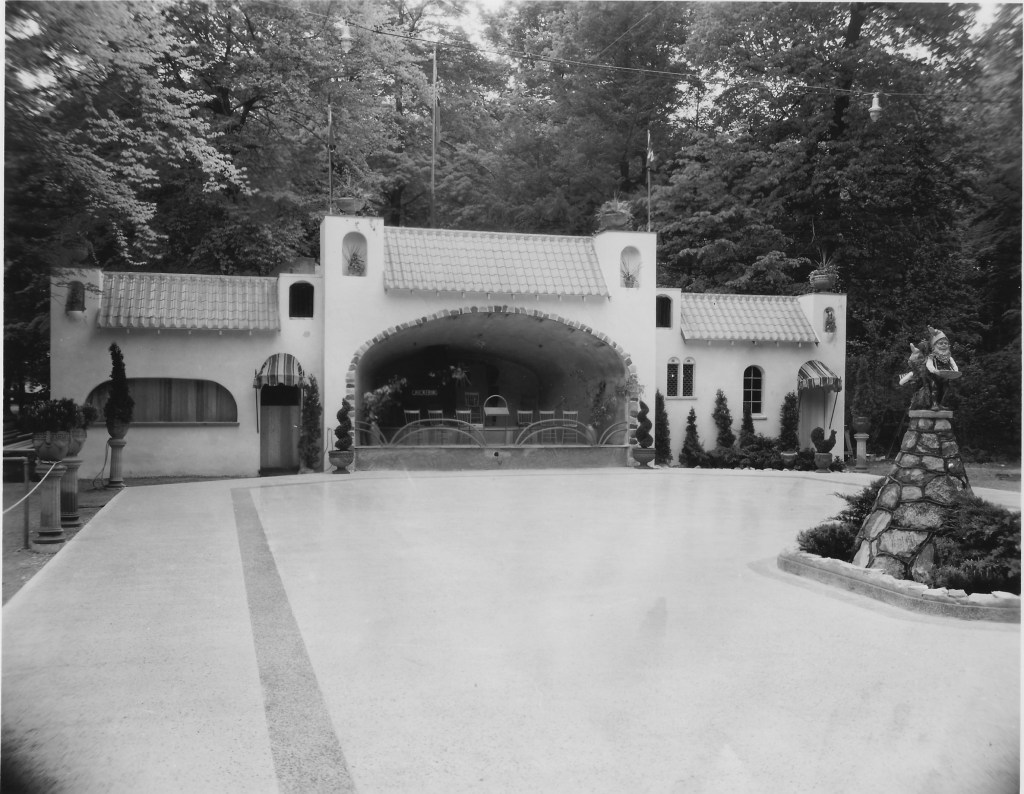
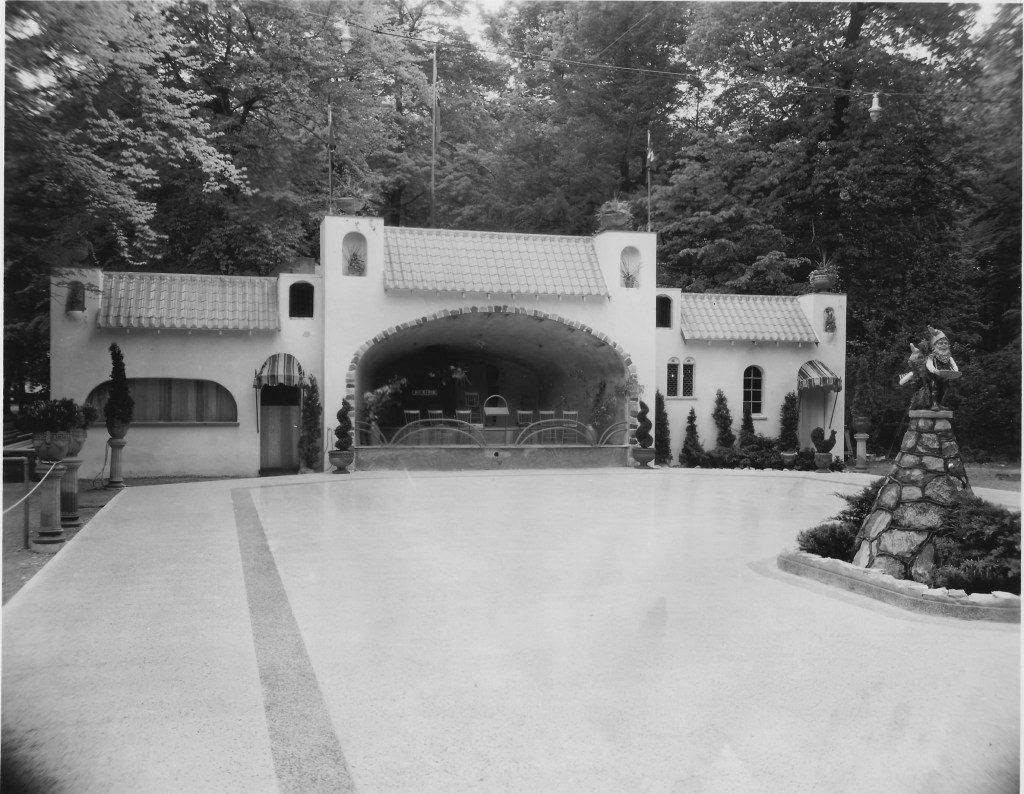
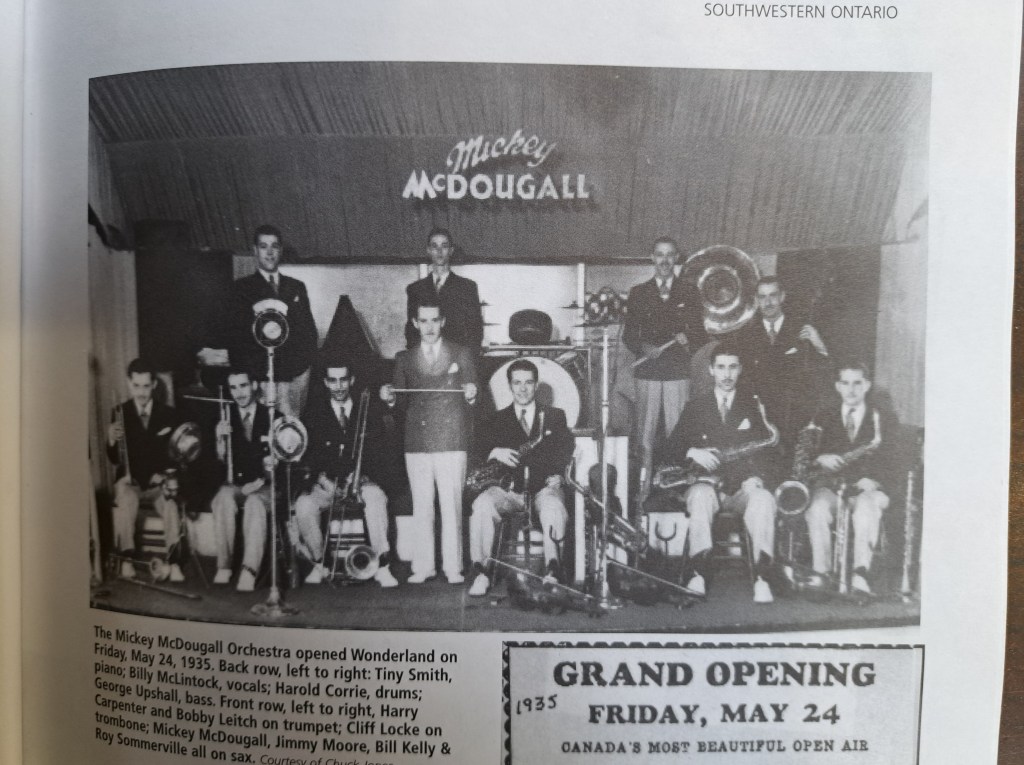
(Pictured: The original Wonderland Gardens Outdoor Bandshell. Wonderland opened on May 24, 1935.)

That brings me up to the summer of 2025.

An unexpected medical diagnosis of Chronic Kidney Disease in July forced me to reevaluate many aspects of my life.

First and foremost, was changing my dietary and exercise habits. Gone are all processed foods, fast foods, and those with high levels of sodium and potassium. No more putting off going to the gym at least three times weekly.

Second, was relieving those things that cause me mental stress and unnecessary anxiety.

At my age (70-something), I decided that I want to fully re-engage with the local arts and culture community, rather than focusing on one aspect of it with my involvement with Silver Spotlight Theatre.

I also want to work at my own beck and call and not be accountable to others who may not always share my at times unbridled enthusiasm and relentlessness.
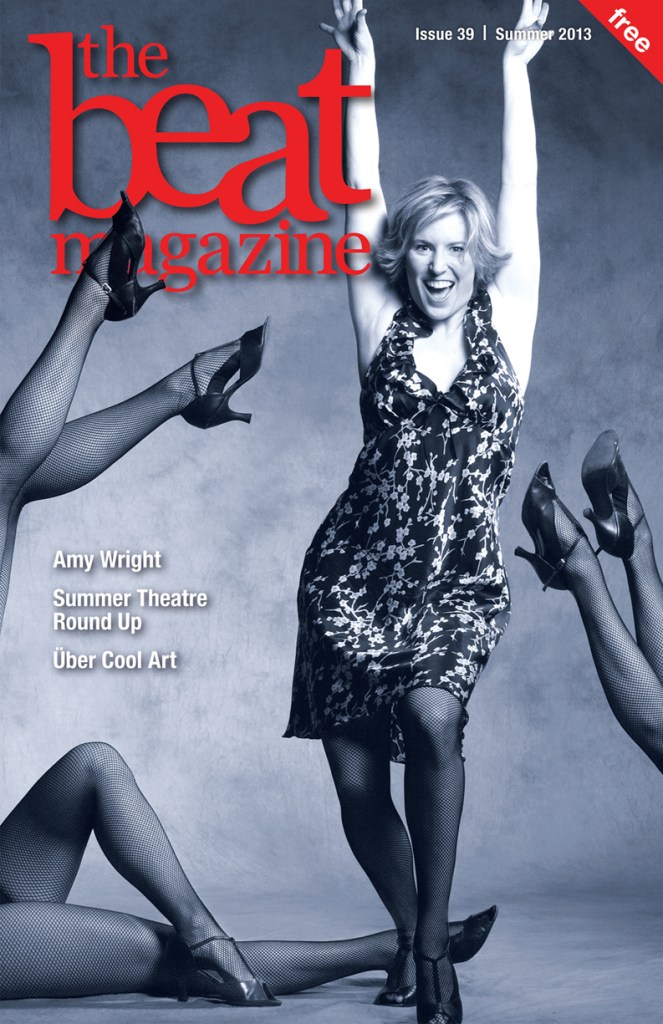
(Pictured: The final issue of The Beat Magazine, Summer 2013, featuring London dancer and choreographer, Amy Wright, on the cover)

In short, reviving The Beat Magazine seemed to be the best course of action to follow at this point in my life.

Has it taken up a lot more of my time than I thought? Hell, yes! But it’s my time and I love it.

Is there any financial return? Hell no! It’s strictly, to use the old cliche, a labour of love.

So, welcome to the new Beat Magazine in the form of The Beat Magazine 2025 website!

Let us know what you would like us to cover. Let us know if you would like to volunteer some writing about the local arts and culture scene. Let us know how we’re doing. What’s working and what’s not working.

Contact me at richardyoung@thebeatmagazine2025.ca

Thanks for taking the time to read this.

Richard Young, Publisher & Content Manager, The Beat Magazine 2025, https://thebeatmagazine2025.ca/
Feature Story: Introducing London and Area Theatre Companies and Groups

The Beat Magazine was London’s premier independent arts print magazine from 2009 to 2013. After a long hiatus (nine years!), I reactivated its website as The Beat Magazine 2025 in late July.

My reason for doing so is straightforward. My goal is to gather together in one place the local arts and culture news that the mainstream London media outlets no longer seem interested in covering, unless there are exorbitant advertising dollars involved.

Since going live online, thebeatmagazine2025.ca has published Weekly Arts & Culture listings, Q&A Interviews with local musicians and artists, Media Releases about local Arts & Culture events, reprinted theatre Reviews from Entertain This Thought, and other general arts news, most of which has not been reported in the local media.

In mid-August, I invited all known active London and area theatre companies – community and professional – to participate in a Feature Story profiling them and their 2025-2026 seasons. Each company/group was sent a generic Questionnaire designed to enable me to gather the necessary information. Most (but, unfortunately, not all) responded with the information I was seeking.

Some companies/groups had lots to say, others not so much.

In light of this, I have decided to organize the responses in a Q&A format using the eight Guide Questions I sent to the companies.

Over the next couple of weeks, I will be posting a new Local Theatre Q&A every other day.

Posts will appear alphabetically, beginning with London’s AlvegoRoot Theatre.

AlvegoRoot Theatre – Telling local stories and creating local theatre of Southwestern Ontario. An Interview with Adam Corrigan Holowitz.

When was your company founded? By whom and why? 

AlvegoRoot Theatre was founded in 2009 by Adam Corrigan Holowitz. Over our first three seasons, we found our mission to develop local plays which speak directly and meaningfully to London and the Souwesto Region.

Is your company best described as professional or not-for-profit community theatre?  

AlvegoRoot is a professional theatre ensemble that primarily focuses on presenting local plays and supporting new play development. A quick note of clarification: not-for-profit vs non-profit. I am not a tax expert by any means, so I may not have the finer points down, but a non-profit exists for the advancement of social good (this can include clubs or recreational organizations) whereas a not-for-profit means any organization that does not have shareholders or an owner to benefit directly based on revenue. Almost all theatres in Canada operate on a not-for-profit basis, meaning they do not have shareholders. This includes most professional theatres. The artists and employees being paid for their labour does not make the venture for one. There are very few commercial for-profit theatres in Canada; Mirvish is the most notable. So, the distinction I generally make is between professional theatre and community/amateur theatre. Both are important, and both take different kinds of sacrifice.

Does AlvegoRoot Theatre have a Mission or Statement of Purpose? 

Telling Local Stories, Creating Local Theatre

London Ontario’s AlvegoRoot Theatre supports the work of local playwrights and puts local stories onstage. 2025 marks AlvegoRoot Theatre’s 17th Season. Over those 17 seasons we have produced over 67 productions, 29 of which were world premieres of local plays. At The Manor Park Memorial Hall, AlvegoRoot presents theatre year-round, dedicated to providing a range of dynamic theatre experiences for audiences and supporting the growth of professional regional theatre makers.

What venue(s) do you use to stage your productions? 

Our home base is The Manor Park Memorial Hall, where we present plays and special events year-round. We are honoured to manage and develop The Manor Park Memorial Hall into a performing arts venue that hosts the work of theatre artists and musicians from across our city. We also produce a summer production annually in June or July at Fanshawe Pioneer Village. We have been partnering with Fanshawe Pioneer Village since 2014.

Does your company have a Board of Directors and paid Staff?

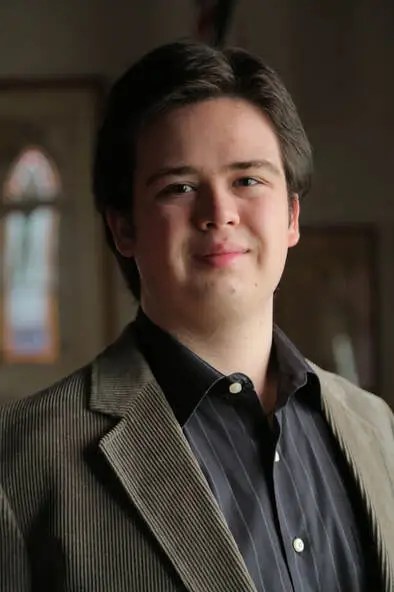
Adam Corrigan Holowitz is the Artistic Director of AlvegoRoot Theatre, and Kydra Ryan is the Associate Artistic Director.

Tell me about your 2025-2026 Season. Does it have any underlying theme?

This season, our three mainstage productions, Medical Wonder, London Fog, and Sleigh Without Bells, have all had an overarching elemental theme of fire. The characters in each play must reconcile with humanity’s ability to create the means for destruction. In Medical Wonder, the character of Dr. Imogen Volek chooses between using her medical research as a means for healing or a means to create a biological weapon. In London Fog, the characters of Victoria and Albert use arson to disrupt and disturb the elite of Edwardian London. Finally, in Sleigh Without Bells, the massacre of the Donnelly Family of Biddulph is central to the play.

What show(s) will you be staging this fall? Tell me a little bit about each. 

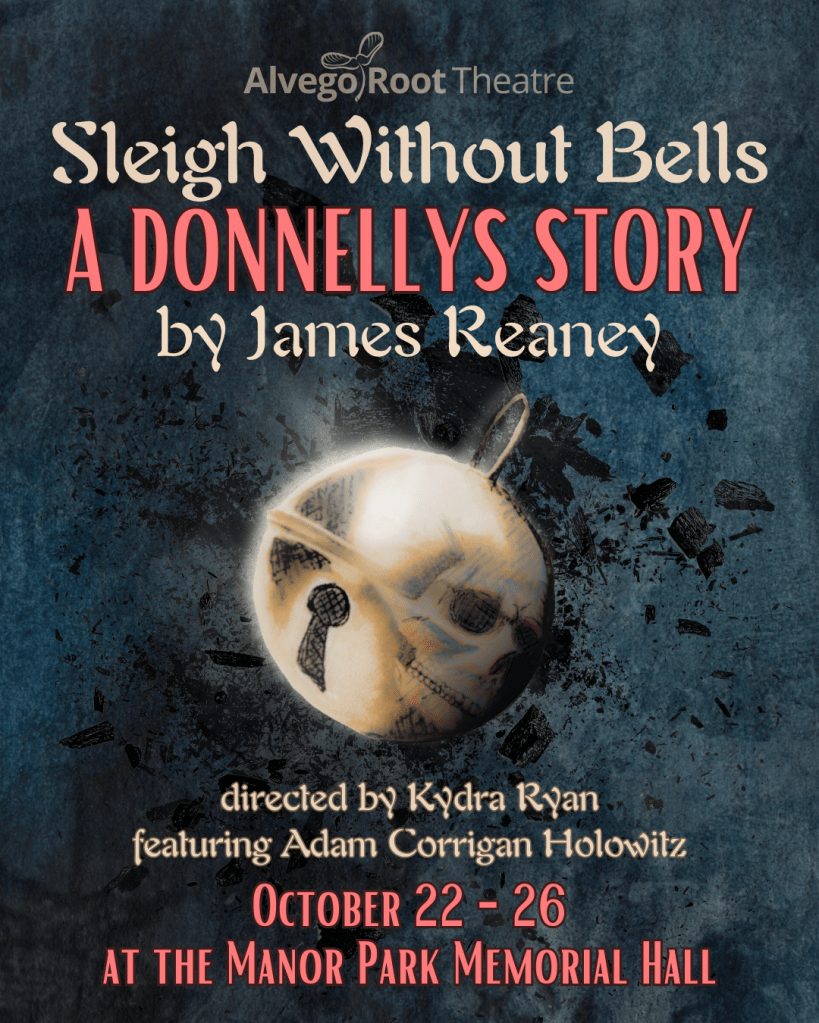
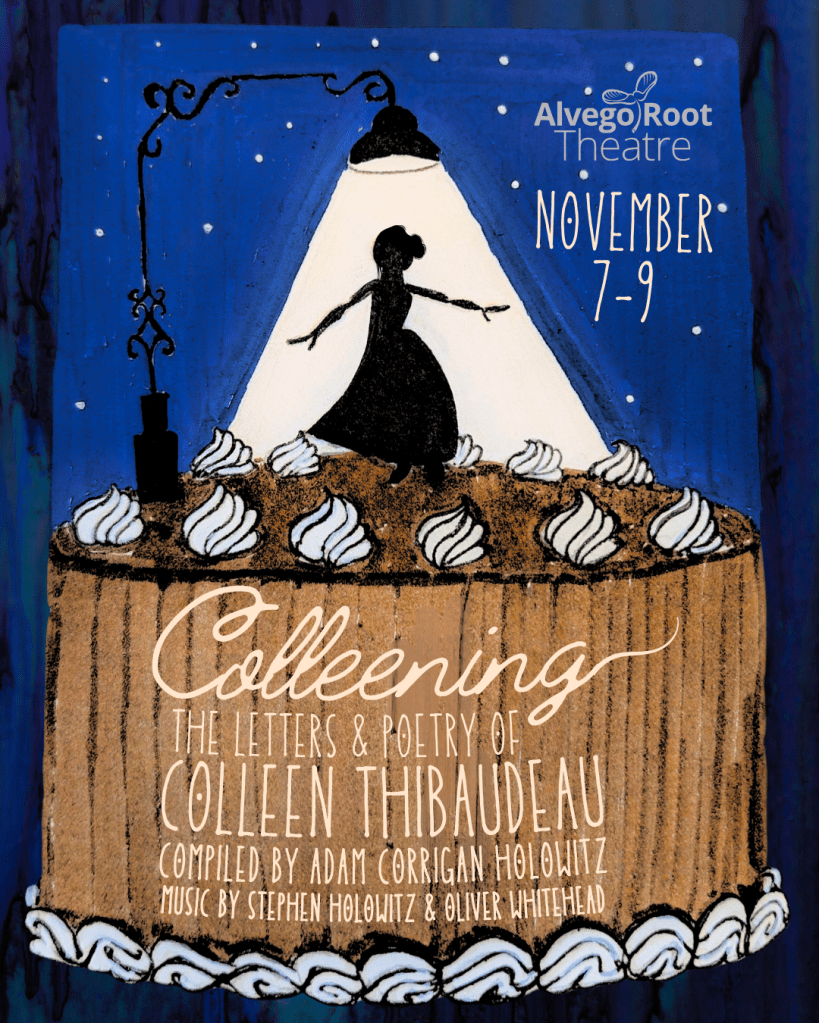
This fall, we present Sleigh Without Bells: A Donnellys Story by James Reaney (October 22) and a theatrical concert version of Colleening: The Letters and Poetry of Colleen Thibaudeau (Nov 7 – 9).

About Sleigh Without Bells:
Lost in a blizzard, a young man finds himself at the Donnelly farmstead, the one place his father warned him not to tread. Now entangled in the darkest period in the lives of the Donnellys, his own life is in danger.

Written by James Reaney
Directed by Kydra Ryan
Performed by Adam Corrigan Holowitz.

About Colleening:
Going COLLEENING is always an adventure for the friends of the great London poet Colleen Thibaudeau. You never know where you may end up. Her letters and poems create a captivating journey through childhood memories, home life, and Canadian culture.

Featuring songs based on her poems by Oliver Whitehead and Stephen Holowitz, this theatrical concert celebrates a seminal figure in Canadian literature with all the playful intensity and tender wit for which Colleen was known.

Directed and Created by Adam Corrigan Holowitz
Text by Colleen Thibaudeau
Music by Oliver Whitehead and Stephen Holowitz
Music Direction by Stephen Holowitz
Featuring Katy Clark, Paul Grambo, Kydra Ryan

This concert version of Colleening is part of Colleening 2025, a grassroots celebration of the centenary of acclaimed London poet Colleen Thibaudeau (1925-2012).

Do you have any thoughts about the London area theatre community and your part in it? 

AlvegoRoot strives to create productions and events where our community can have meaningful interactions with live theatre. A goal of our work is to nurture rich relationships between the audiences, the artists, and the plays in a space where all members of the community can feel welcomed, needed, and comfortable to engage with theatre that tells our local stories and speaks to our local community.

The Souwesto arts movement, of which James Reaney and Colleen Thibaudeau were prominent members, greatly influences our work. The use of local stories, people, and geography is central to AlvegoRoot. Reaney’s playwriting influences me through aesthetics, poetry, and symbolism to tell local stories. Thibaudeau’s ability to saturate her poetry with local and personal details has influenced our writing and theatre-making. While a wide range of writers and theatre artists influence our work, Reaney and Thibaudeau’s work continues to influence AlvegoRoot on a spiritual level more than any other artists.

For more information about AlvegoRoot Theatre and to purchase tickets, visit https://www.alvegoroottheatre.com/

You can also follow AlvegoRoot Theatre on Facebook and Instagram.

Meet London Chanteuse Laurraine Sigouin

Laurraine Sigouin, a bilingual jazz singer and Forest City London Music Award winner, has performed at top London venues like Aeolian Hall, the Home County Music and Arts Festival, and the popular Jazz for the People concert series. The following is an edited Q&A from The Beat Magazine’s 2009 interview with Laurraine. 

Could you tell me about your upbringing and your early musical endeavours as a child and teenager? 

I grew up in Cochrane, Ontario, as the youngest in my family. I am proud of my French-Canadian roots. Surrounded by music from an early age, I began playing piano early and developed a lifelong passion for music. 

What brought you to London? 

At nineteen, I left home to study Music and French at the University of Western Ontario. This marked the beginning of my journey in both the arts and education. 

Could you tell me about your career in education? 

I had a fulfilling career teaching Music at Kensal Park French Immersion School in London. I am very grateful for the many years I spent sharing the joy of music with my students. 

Can you cite some highlights of your teaching career?

When I first started teaching music, I taught the entire program from Kindergarten through Grade 8. It was such a joy to guide students from their very first music lesson all the way to their final band concert. Watching each child develop their skills and grow in confidence — in their own unique way — was incredibly rewarding. Being part of that full journey was one of the true highlights of my teaching career.

I loved all our concerts, but one of the most meaningful traditions was taking my Junior Choir — often 100 to 120 children — to perform at Parkwood Hospital. The tradition began when my father was a resident there and continued long after he was gone, right up until my final year of teaching.

It was truly the highlight of the year for me and for many in the choir. When my father lived there, the kids were especially excited to go and sing for him. Jake Levesque accompanied those concerts as well, adding his warmth and musicianship to the experience.

How long have you been playing music professionally?

I’ve been performing since 1997, when I started working with Mosaic, a vocal trio alongside Catherine McInnes and Jake Levesque.

Do you consider yourself a full-time or part-time musician? 

Most of my days revolve around music in one way or another; it takes up a huge part of my life, whether I’m preparing for a concert, teaching my grandchildren, playing the piano, learning a new song, or just listening.

In addition to vocals and piano, do you play any other musical instruments? 

I didn’t pursue wind instruments as a performer, but during my music studies at Western, I gained enough of a foundation to teach them. I found immense joy in guiding students through their first notes, and helping them grow musically was a true privilege.

What have been your musical influences over the years? How would you describe your musical style? 

My musical tastes are quite diverse and eclectic, so it’s hard to pinpoint specific influences. I’m drawn to a wide range of styles, and I think that variety naturally shapes how I connect with music. I listen to a lot of Radio-Canada and love discovering artists or songs I haven’t heard before. That constant sense of discovery is what keeps music exciting for me.

My songbook draws inspiration from a wide variety of styles, including jazz, Latin, cabaret, bossa nova and samba, contemporary Québécois pop, French-Canadian traditional music, and Cajun music. It features artists and bands like Harmonium (Serge Fiori), Robert Charlebois, Charles Aznavour, Serge Gainsbourg, Édith Piaf, Henri Salvador, Pink Martini, Beausoleil, Zachary Richard, and Compagnie Créole. I also cover songs written by my very talented friends Steve Hardy and Jake Levesque — some of which are the result of collaborative songwriting projects.

Tell me about the various groups and musicians you have played with over the years. 

My performance career includes many years singing with London Pro Musica, as well as performing with the vocal trio Mosaic. Mosaic recorded two albums and appeared at major events, including the Montreal Jazz Festival and Home County Folk Festival. 

In 2004, Jake Levesque and I founded Enchanté to celebrate our Francophone and bilingual repertoire. The duo grew into a vibrant musical family featuring some of London’s finest jazz musicians. I am honoured that Enchanté received the 2025 Forest City London Music Award for Jazz Vocal (Solo/Group). Making music with this group remains one of the greatest joys and highlights of my life and musical career. 

Do you have any memories of the late Jake Levesque you would like to share?

There are so many special memories. I met Jake in 1997 when we formed Mosaic. We rehearsed two to three times a week, and we always had so much fun when we worked together. That same spirit carried into our time with Enchanté as well.

Jake also accompanied all my ensembles at Kensal Park. As school concerts approached, our weekly Enchanté rehearsal time was often dedicated to arranging and going over music for my school choirs. And he did all of that with joy.

My students could hardly contain themselves when Monsieur Levesque walked into the gym — it was like a rock star had arrived. He always spoke en français and never missed a chance to encourage and celebrate their talent.

A beloved school tradition was ending our Concert des Fêtes with Jake’s performance of Linus and Lucy. Former students still tell me that every time they hear it, they think of Monsieur Levesque — for many families, it became a holiday highlight.

He gave his time and talent with such generosity.

What are some of the musical venues where you have performed? 

I have performed at many of the city’s beloved venues, including Aeolian Hall and Ironwood Kitchen and Grill, and at events such as the London Jazz Festival, Jazz by the Bog, the Springbank Garden Concert Series, The Aeolian Jazz and Musical Arts Festival, and le CFA-Forum provincial. 

Are you working on any special projects or have any upcoming gigs you would like readers to know about? 

A special project that I’d like to mention is a recording of the compositions that Jake and I wrote together. We were thrilled to collaborate with Christoph Babin (sound engineer), Stephen Holowitz (piano), Paul Stevenson (trumpet), Jesse Grandmont (fiddle), and Leah Grandmont (fiddle). Their musicianship is truly extraordinary, and we were absolutely thrilled with the results. The recording is available on my Bandcamp page. if you search for my name on the Bandcamp site  https://bandcamp.com/, you’ll find our songs there.

I also have an upcoming porch concert on September 1 on Elmwood Ave in Old South. Stephen Holowitz will be joining me on piano, and Paul Stevenson on trumpet. It’s open to the public, so if anyone would like more information about that or future events, you can find me on Facebook by searching my name or Enchanté and follow me on Instagram at @Laurrainesigouin.

In addition to your musical endeavours, are you involved with any other arts organizations or activities in London? 

At the moment, I’m not involved with other arts organizations in London. Between my musical work, supply teaching, and family life, my days are pretty full. That said, I’m always open to new collaborations or opportunities within the arts community.

Is there anything else you think our readers should know about Laurraine Sigouin, the musician, and Laurraine Sigouin, the individual? 

Today, I find joy making music with my grandchildren, supporting my oldest as he learns violin and teaching piano to my younger ones, and continuing to share my love of music both in performance and at home. 

Dorothy Parker On Writing.

(Source: Writers Write)

How do you actually write out a story?

‘It takes me six months to do a story. I think it out and then write it sentence by sentence—no first draft. I can’t write five words but that I change seven.’

How do you name your characters?

‘The telephone book and from the obituary columns.’

Do you keep a notebook?

‘I tried to keep one, but I never could remember where I put the damn thing. I always say I’m going to keep one tomorrow.’

How do you get the story down on paper?

‘I wrote in longhand at first, but I’ve lost it. I use two fingers on the typewriter. I think it’s unkind of you to ask. I know so little about the typewriter that once I bought a new one because I couldn’t change the ribbon on the one I had.’

How about the novel? Have you ever tried that form?

‘I wish to God I could do one, but I haven’t got the nerve.’

Do you think economic security an advantage to the writer? 

‘Yes. Being in a garret doesn’t do you any good unless you’re some sort of a Keats. The people who lived and wrote well in the twenties were comfortable and easy living. They were able to find stories and novels, and good ones, in conflicts that came out of two million dollars a year, not a garret. As for me, I’d like to have money. And I’d like to be a good writer. These two can come together, and I hope they will, but if that’s too adorable, I’d rather have money. I hate almost all rich people, but I think I’d be darling at it.’

The Paris Review interview by Marion Capron

Remembering Wonderland Gardens and The Pop Festival of August 1969

Mention the name Wonderland Gardens today, and most Londoners will probably respond, “Wonderland what”?

The site of the legendary dance hall, which burned down in 2005, is now called Springbank Gardens, and all that remains of the original venue is the outdoor bandshell.

The story of Wonderland Gardens begins in the early 1930s, when Charles Jones signed a long-term lease for a small lot of land in Westminster Township adjacent to the Thames River. His plan was to build a series of gardens, fountains, woods, ponds, and footpaths, including a luxurious swimming pool, all surrounding a 550-square-metre, open-air dance floor with a bandstand and Spanish Colonial-style pavilion.

Wonderland Summer Gardens opened on May 24, 1935, and it quickly became one of the city’s hot spots. Big Bands like Guy Lombardo and his Royal Canadians and those led by Glenn Miller, the Dorsey brothers, and local musicians like Johnny Downs and Lionel Thornton all graced the venue’s bandshell. Generations of Londoners danced and canoodled under the stars on the venue’s open-air dance floor.

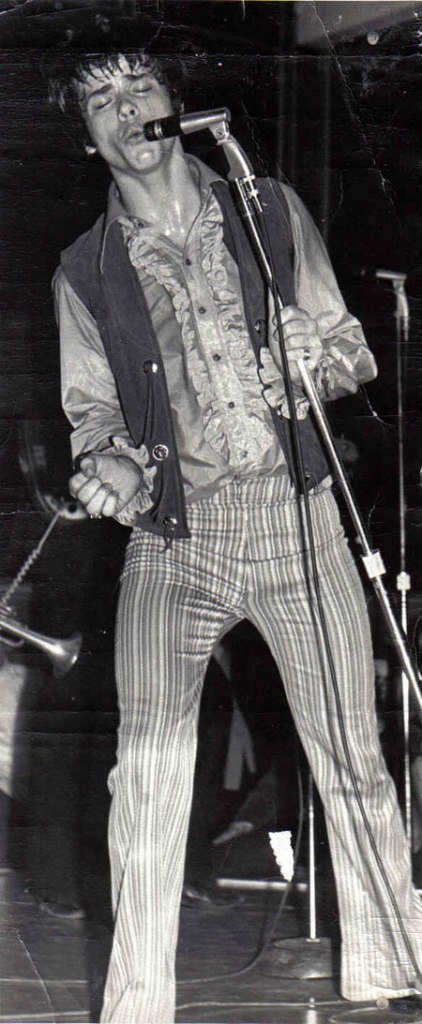
As the decades passed and musical tastes changed, the venerable dance hall changed with the times. By the 1960s, Wonderland was London’s favourite concert/dance hall for the thousands of London area Boomers who flocked there to see major acts like Sly and the Family Stone, Deep Purple, The Mandala, Grant Smith and the Power, and many others too numerous to list.

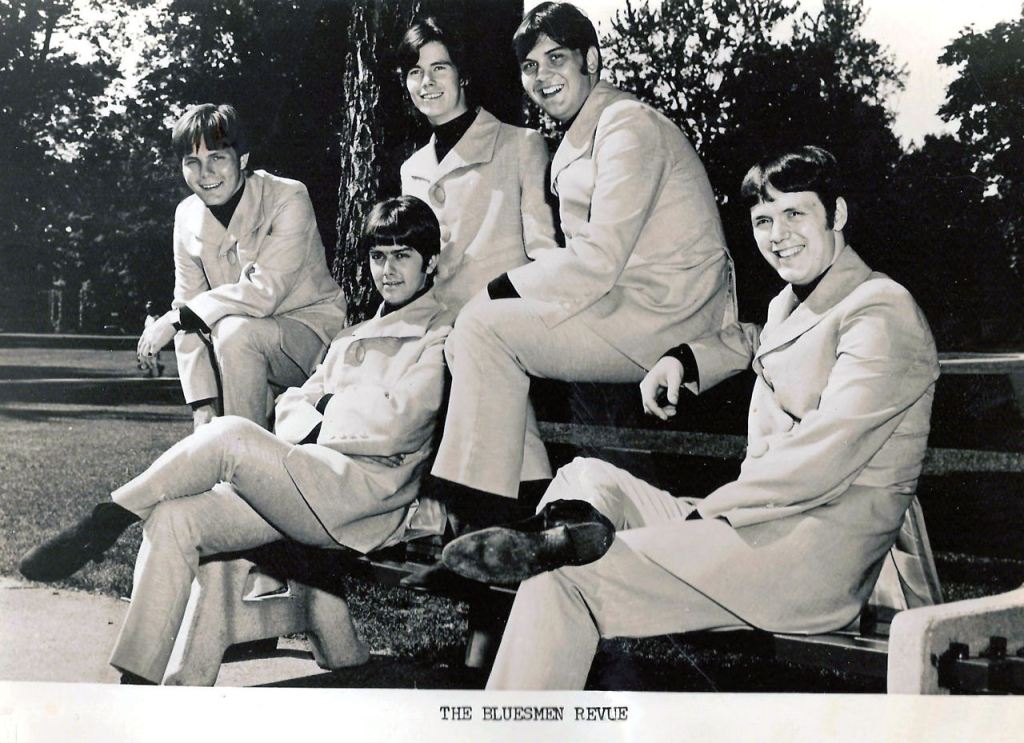
Wonderland was also a jumping-off point for local bands like The Bluesmen Revue, A Small Experience, and The New Set, who mostly opened for the headliners.

For John Sharpe, The New Set’s former drummer, Wonderland holds a special place in his musical career.

“A group could play any number of teen towns or private events, but everyone knew you had not really ‘made it’ until you played Wonderland,” recalls John. “It was a magical place that attracted hundreds of teens to its weekly rock ‘n’ roll shows, so every group in the area wanted in on the action.”

Jim Chapman, former bassist for The Bluesmen Revue, a very popular London R&B group, remembers headlining at Wonderland many times.

“The room had excellent acoustics both on the stage and in the hall. In those days that was the exception rather than the norm,” Jim recalls. “And it had one of the smallest dressing rooms I ever saw in a venue that size. How the multi-person big bands ever managed to get their people dressed for a gig I cannot imagine!”

Ken Thorne, of A Small Experience, another London band that regularly played Wonderland, remembers the venue’s dressing rooms, too.

“The original dressing room walls were scrawled with the signatures of many of the artists who performed there. Whenever we played there, we used to try and find the new additions while waiting to go on stage,” says Ken.

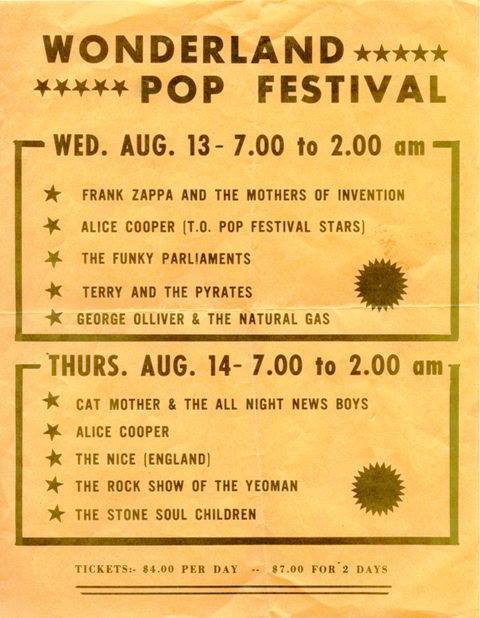
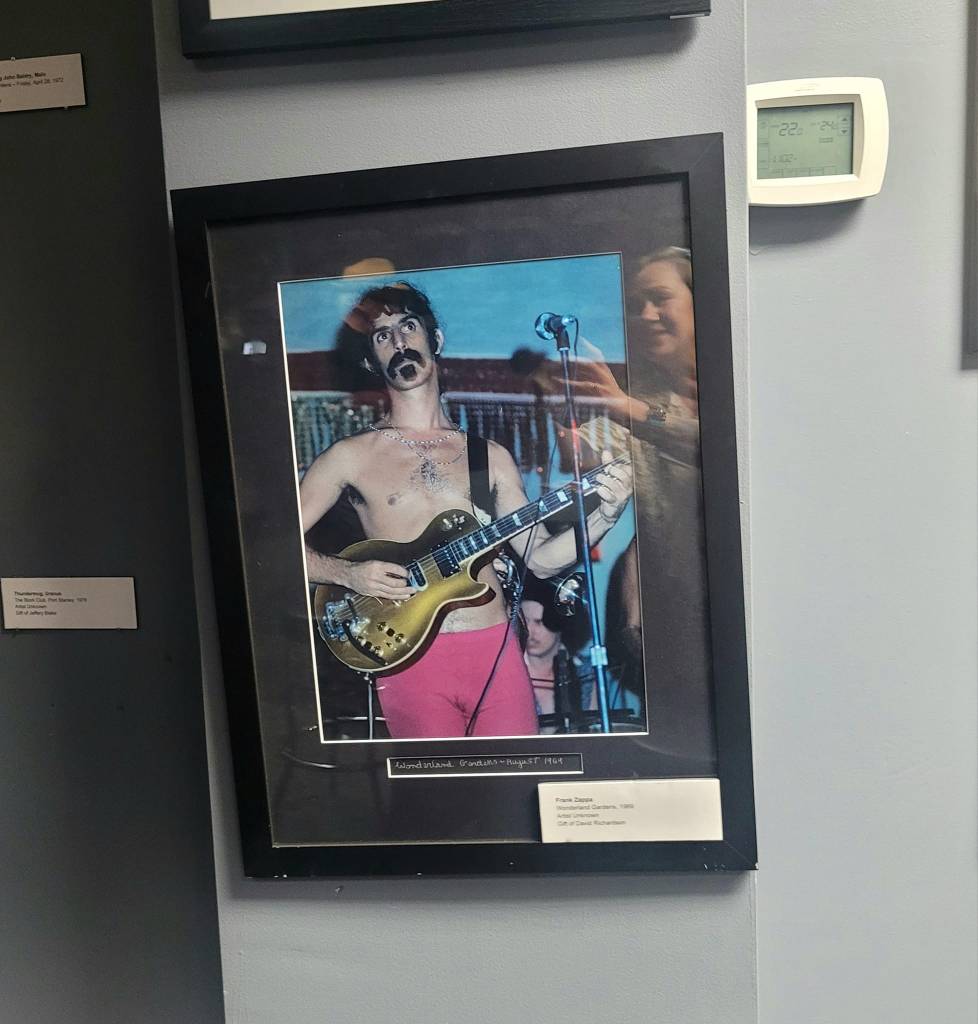
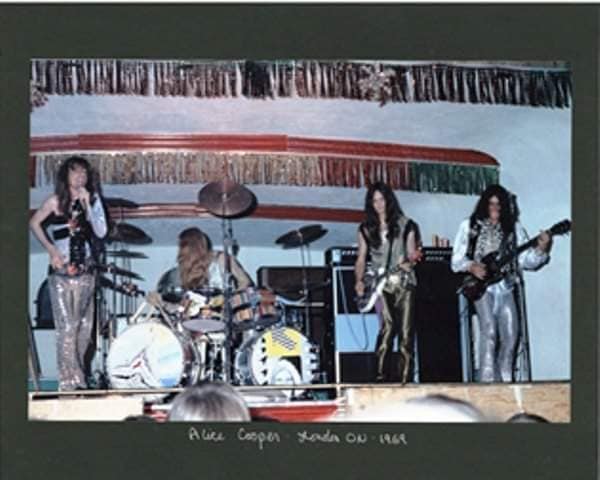
On August 13 – 14, 1969, Wonderland hosted a two-day Pop Festival featuring Frank Zappa and the Mothers of Invention, Alice Cooper, Cat Mother & The All Night News Boys, George Olliver & The Natural Gas, and others for the whopping price of $7.00! The event preceded the much larger Woodstock Music Festival that took place in New York State, August 15 – 18.

Apparently, Zappa was asked why he wasn’t playing Woodstock. His reply? “Because we don’t want to.”

Rumour has it that after his set, Zappa waterskied on the heavily polluted Thames River, which flowed behind Wonderland! The rumour was recently confirmed during an interview I did with Chuck Jones.

As the years progressed, touring acts moved to other venues in town and Wonderland became more of a location for special events like company parties, conventions, rallies, and receptions.

“In its final days, the City of London had an active interest in Wonderland, but the council would not invest the money needed to refurbish it and keep it a top live performance venue,” Jim laments. “When Wonderland burned down, there was a lot of talk that something political and fishy had gone on, though I have no way of knowing if that was the case. Like many people, when I heard news of the fire, I shed a tear for all the great days and memories gone by.”

So next time you pedal or walk through Springbank Gardens, take a pause to see if you can hear some of the strains of great music that was once played on the site.

Author’s Note: Since this story was published in The Byron Villager a few years back, I was commissioned by the City of London Culture Office to prepare an Interpretive Sign that visually tells the history of Wonderland Gardens from 1935 to its rebirth as Springbank Gardens. Hopefully, the official unveiling of the sign will take place by summer’s end.